 Bilal Siddiqui
A product listing is not just text on a page. It is the system that connects your product to the right shopper, sets expectations, and earns the purchase.
This guide is the foundation. We will cover what a strong listing is made of, how each section supports clarity and conversion, and how to build a listing that stays stable as your market gets more competitive. If you want deep algorithm theory, exact keyword placement rules, backend search term byte limits, or A+ image specs, those live in separate dedicated guides. This page stays focused on the full listing build, end-to-end.
Whether you are managing Amazon FBA for beginners or running a seven-figure Amazon Private Label brand, the goal remains the same: stop interrupting the customer and start offering them the exact solution they are hunting for.
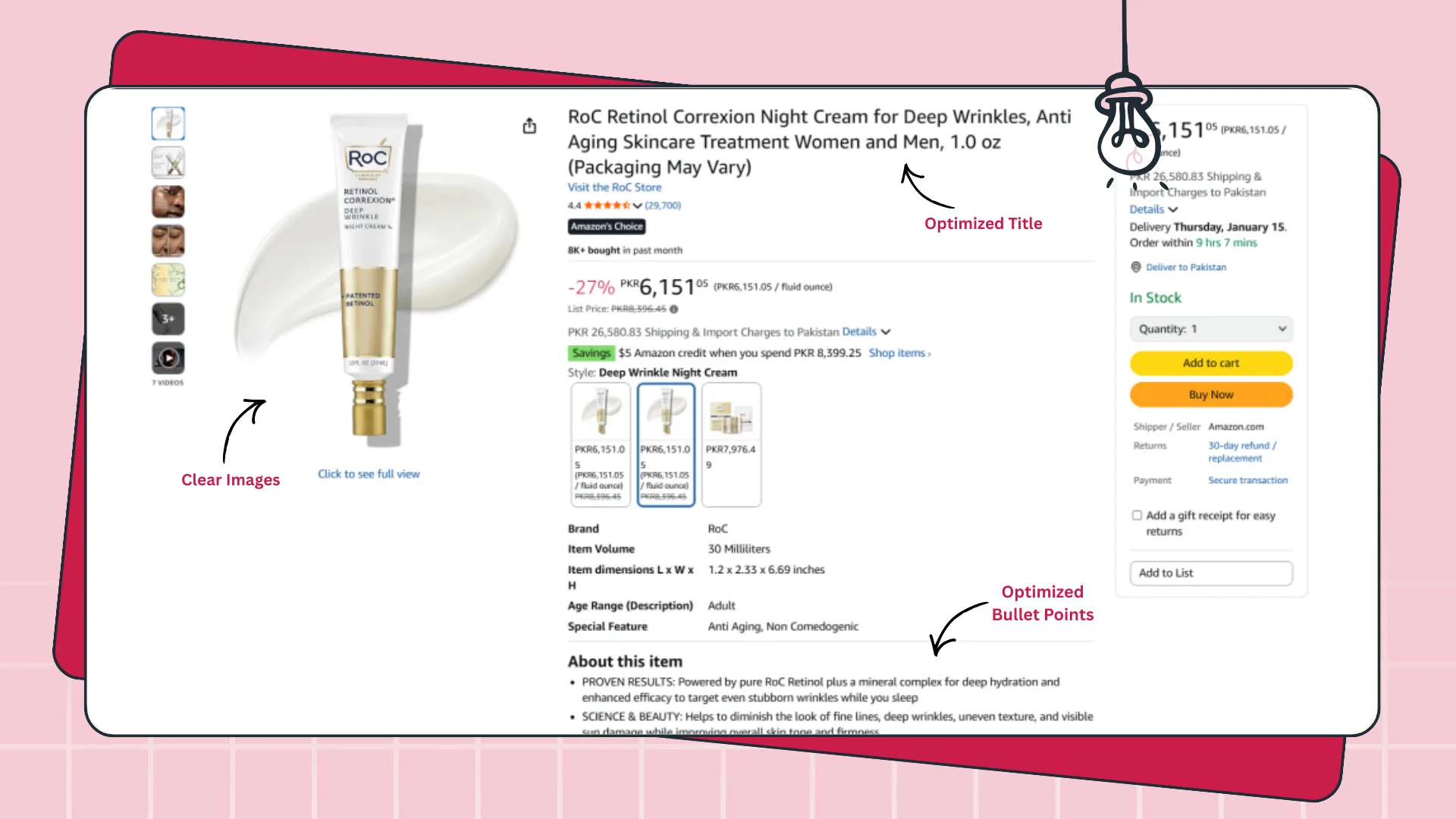
This guide is designed for serious sellers, brand managers, and teams who want a clear Amazon listing optimization framework without getting lost in outdated tricks. We will show what a strong listing is made of and how to improve clarity, trust, and conversion across Research, Writing, and Visuals. Deep dives like algorithm theory, exact keyword placement rules, backend search term byte limits, and A+ image specs live in separate dedicated guides. This page stays focused on the full listing build, end-to-end.
What this guide covers:
The real metrics of success in 2026: why CTR and conversion matter as much as ranking.
The 3-phase workflow: Research, Writing, and Visuals (what to do first and why).
Mobile-first priorities: what must be clear in the first few seconds on a small screen.
How each listing section supports clarity, trust, and purchase decisions.
How to keep your listing stable as competitors copy and the market shifts.
If you want the deep dives, use these dedicated guides:
Context and the Real Goal of Optimization
Before we dive into writing titles and descriptions, it is crucial to understand what we are actually trying to achieve. Many sellers mistakenly believe that Amazon SEO is solely about ranking for the highest volume keywords found in a standard Amazon keyword tool. However, ranking is only half the battle. The real goal of Amazon listing optimization is to maximize the efficiency of every visitor who lands on your page. You need to look at your listing through the lens of three specific metrics: Click-Through Rate (CTR), Conversion Rate (CVR), and Keyword Coverage. If you rank #1 for a term like "running shoes" but your product listing optimization fails to convince the user to click or buy, Amazon’s algorithm will quickly drop your ranking because it signals that your product is not relevant.
Success in 2026 is measured by how well your listing aligns with the specific "Search Intent" of the customer. For example, a customer searching for "cheap running shoes" has a very different intent than someone searching for "professional marathon running sneakers." Your Amazon pricing strategy, images, and copy must align with that specific intent. Furthermore, with the rise of Amazon mobile optimization, the real estate you have to convince a buyer has shrunk. You no longer have the luxury of giant walls of text; you need concise, punchy, and benefit-driven copy that works instantly on a 6-inch screen. This means your Amazon listing quality score isn't just a vanity metric inside a software tool; it is a direct reflection of your potential revenue. By focusing on Amazon conversion rate optimization first, the organic rankings will naturally follow as a byproduct of high sales velocity.
💡 Pro Tip
Ready to stop guessing and start ranking?
Stop manually researching competitors and guessing your brand tone. Let AI do the heavy lifting for you.
Try Flairox Listing for Free – Optimize Your First Listing Now
The Step-by-Step Optimization Process
Now that we understand the "Why," let's move to the "How." This workflow is designed to take you from a blank page to a fully optimized listing that is ready to convert traffic into sales. We will break this down into specific phases: Research, Writing, and Visuals.
Phase 1: Building the Keyword Map & Semantic Core
The foundation of any great listing is solid data. You cannot write effective copy if you do not know the language your customers use. Start by using an Amazon keyword research tool to gather a raw list of terms. However, do not just look for high volume; look for relevance. You need to categorize these into three buckets: Root Keywords (broad terms like "protein powder"), Long Tail Keywords (specific intent terms like "keto friendly vanilla protein shake for women"), and Competitor Keywords (terms your top rivals are ranking for).
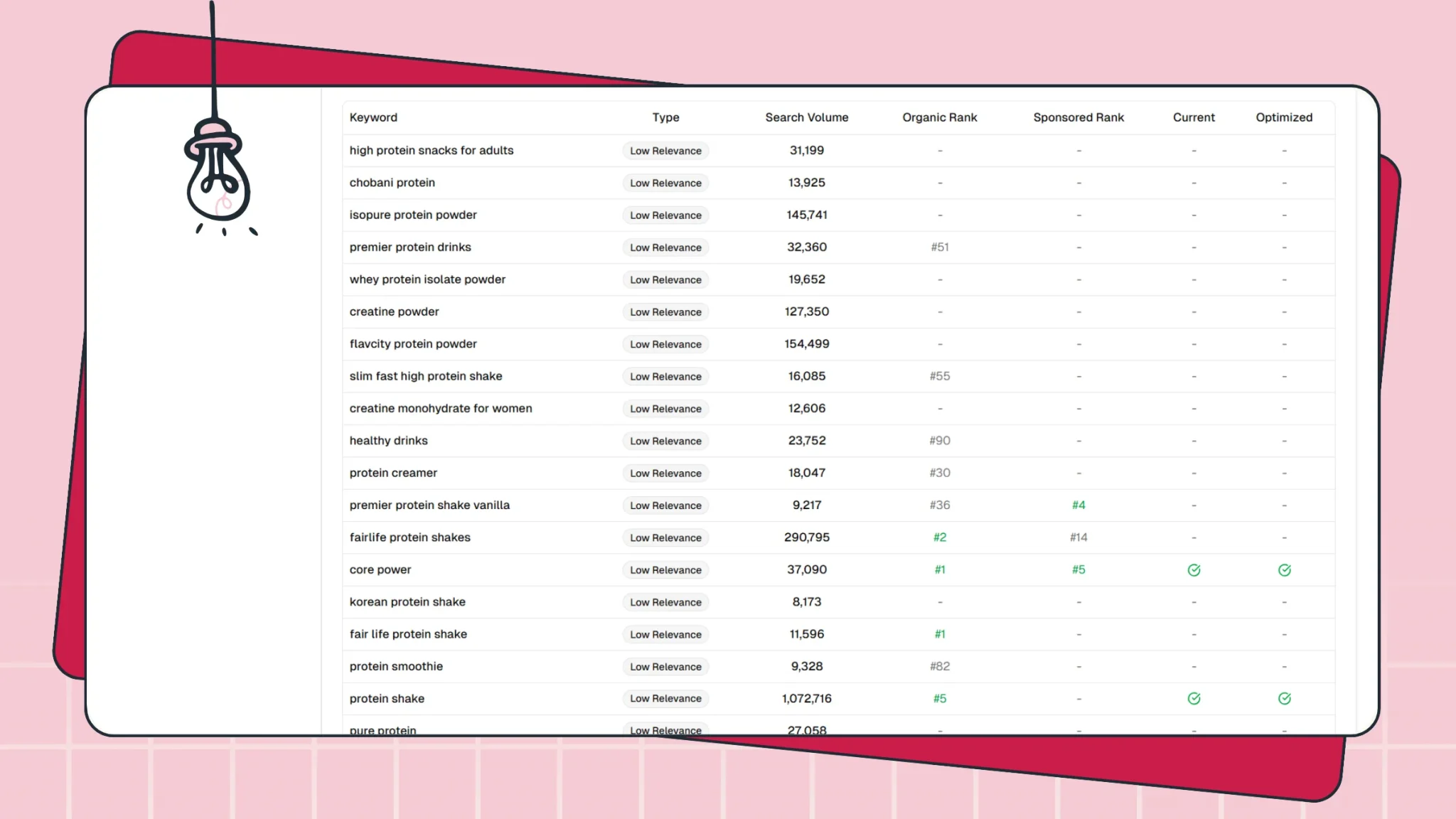
Once you have this list, create a simple keyword map. The goal is not to force keywords into every line. The goal is coverage and intent alignment.
Your keyword map should group terms by buyer intent (what the shopper is trying to solve) and then assign each intent group to a listing section. This keeps your copy readable and reduces keyword stuffing.
If you want the full step-by-step system for building a keyword map, use: Amazon keyword research system to build a keyword map. For exact placement rules (title vs bullets vs backend) and character or byte limits, use: keyword count and placement guide and backend search terms strategy.
The Generic Keywords field in Seller Central is limited to 250 bytes — exceeding this limit means Amazon ignores all of your backend keywords. See our full backend keywords guide for a worked byte-count example and indexing tips.
Phase 2: Writing High-Converting Copy
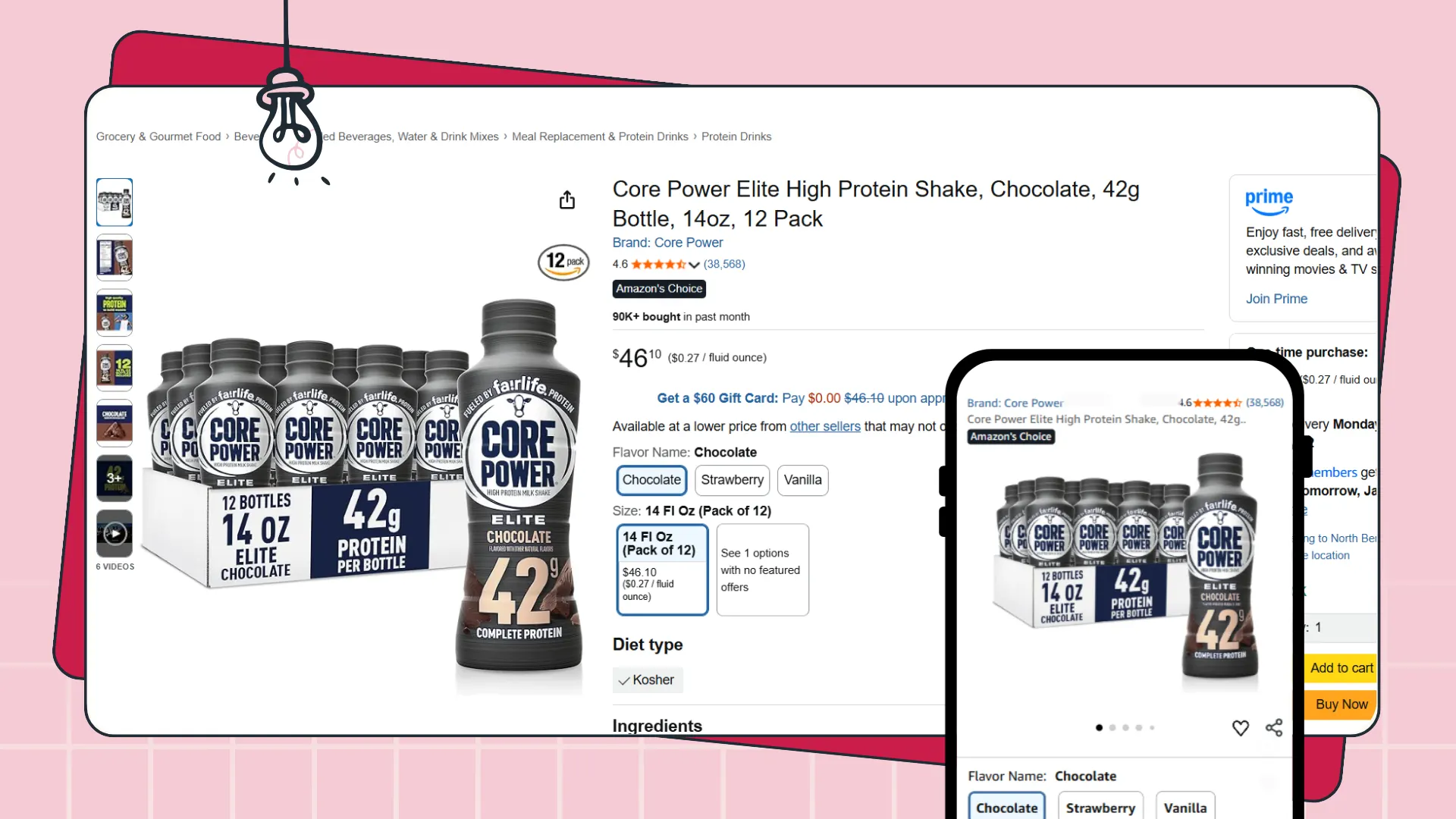
Once your keyword map is ready, it is time to write. However, writing for Amazon is distinct from writing a blog post or a standard e-commerce site. You are dealing with a platform where the customer is in a hurry and skimming for information. Your copy needs to be structured, scannable, and optimized for Amazon mobile optimization.
1. The Product Title: Your First Impression
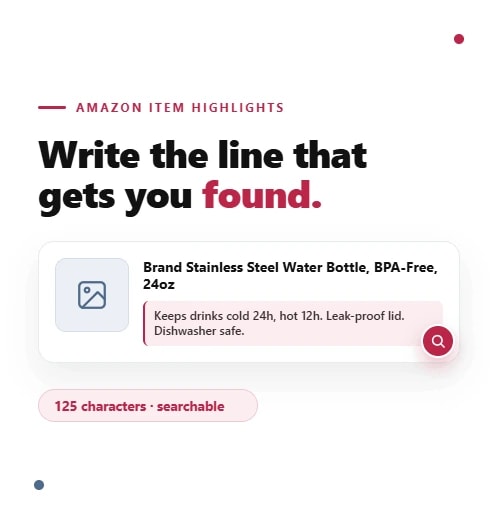
Your title has one job: earn the click by communicating relevance fast.
Write the title for a mobile shopper first. Put the product type and the primary buying reason early, so the most important meaning appears before the title truncates on mobile.
Keep it clear, specific, and readable. Avoid claims or promotional language that can trigger policy issues.
If you want exact rules on how many keywords to use and where to place them, use: Amazon keyword count and placement guide.
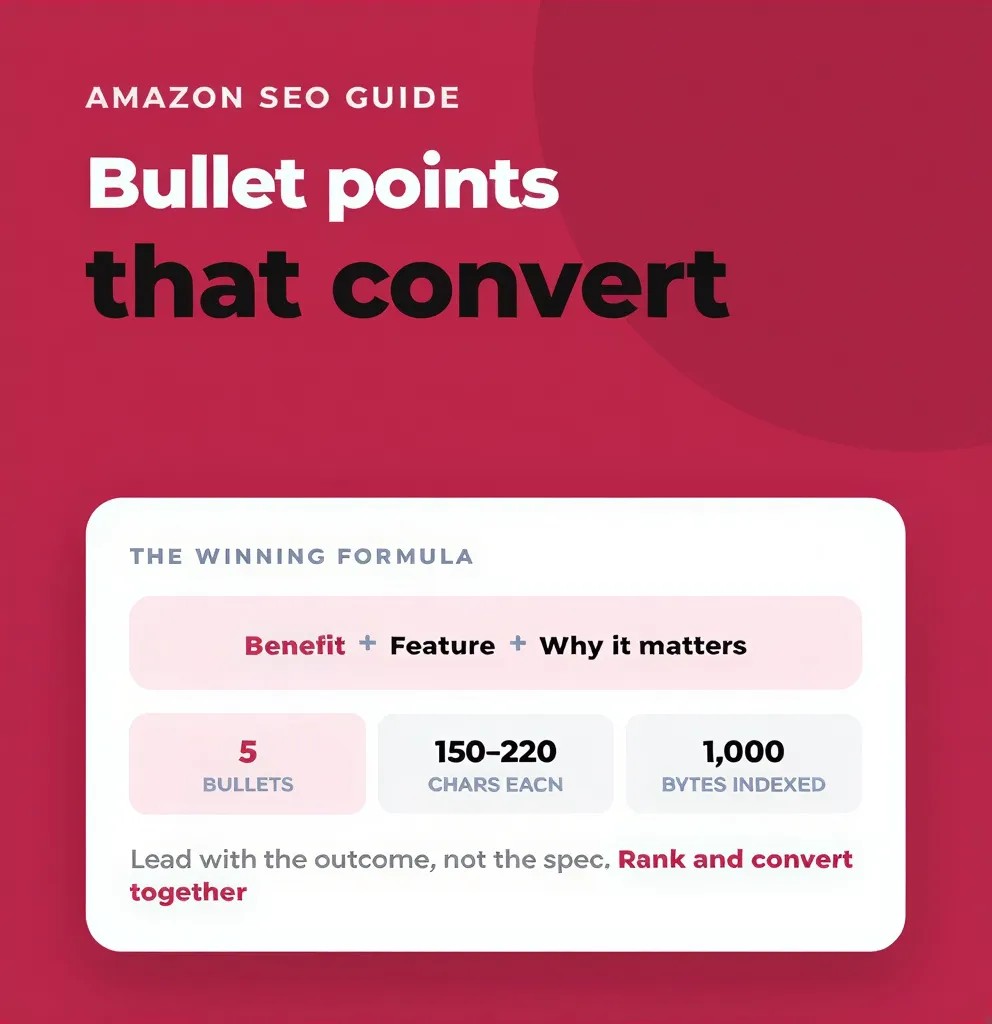
2. Bullet Points: Features vs. Benefits
The Amazon bullet points section is where you close the sale. A common mistake among Amazon FBA for beginners is listing dry technical specifications (e.g., "Contains 20g protein"). To improve your Amazon conversion rate, you must translate features into benefits.
The Strategy: Use the "So What?" test. Your product has 20g of protein? So what? "So you can build lean muscle faster after a workout."
Formatting: Keep bullets scannable. You can use short lead-in phrases if they help readability, but do not force a rigid style. Clarity matters more than formatting tricks.
Next Step: If you want a full writing playbook for titles and bullets, use: Amazon SEO listing optimization guide.
3. Product Description & Brand Story
If you have Brand Registry, use A+ Content to explain the product visually and build trust. Use it to answer common questions, show proof, and reduce objections that images and bullets cannot fully handle.
This guide does not go deep into A+ modules, layouts, or image specs. Use the dedicated A+ guides for setup, best practices, and templates:
Phase 3: Visual Optimization (Images & Video)
You cannot have an optimized Amazon listing without stellar visuals. Humans process images faster than text. If your main image does not pop, your Click-Through Rate (CTR) will suffer, and Amazon will show your product less often.
Main Image Compliance: Follow Amazon image requirements strictly so your listing stays eligible and does not get suppressed. Keep the main image clean, clear, and instantly understandable on mobile.
Secondary Images (Infographics): Use these to visually explain key outcomes, dimensions, ingredients, or use-cases. Infographics are crucial for shoppers who refuse to read text.
Lifestyle Photography: Show the product in use. This helps the customer visualize ownership.
Amazon Video Listing: Video helps buyers understand the product quickly and removes doubts that images cannot.
For exact image specs, copy limits, and design rules, use: A+ Content best practices and image specs.
Common Mistakes and How to Fix Them
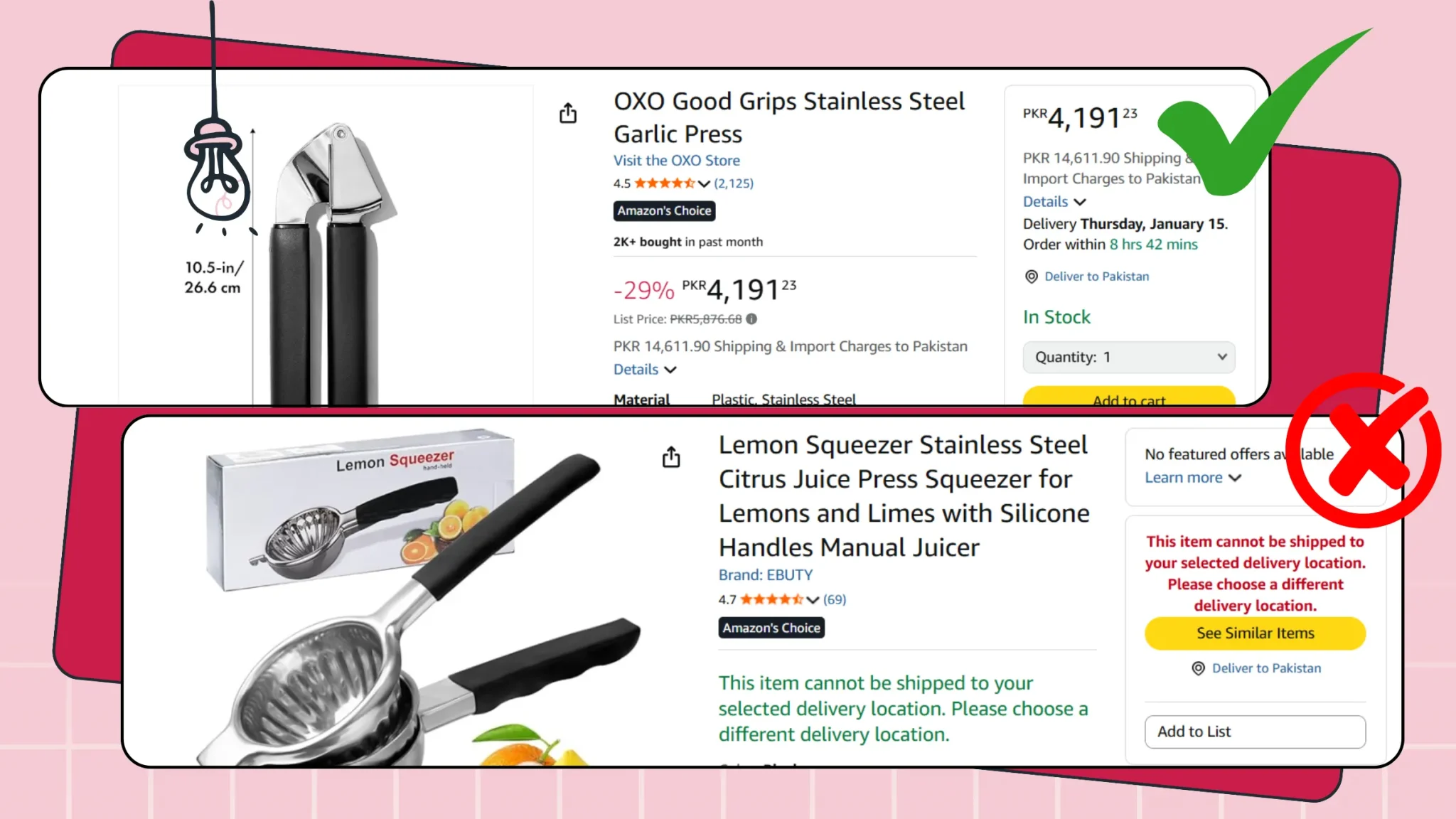
Even experienced sellers fall into traps that reduce performance over time. Conducting a regular Amazon listing audit is the best way to catch these issues before they hurt your results.
Keyword Stuffing (The "Wall of Text")
Years ago, jamming every possible keyword into the title worked. Today, it hurts your Amazon conversion rate. If your title reads like a robot wrote it (e.g., "Protein Powder Shake Muscle Gym Workout Supplement Drink"), customers will ignore it.
Fix: Use a natural sentence structure that prioritizes the human reader while placing the main meaning early.
Ignoring the "Mobile-First" Reality
Many sellers design their listings on desktop and never check how it looks on a phone. On the Amazon App, descriptions are often collapsed, and bullet points are truncated.
Fix: Always preview your Amazon product listing on a mobile device. Ensure your first two bullet points contain the most critical sales arguments.
Inconsistent Brand Voice
If your title sounds clinical but your description sounds casual, you lose trust. This often happens when different team members work on the same account.
Fix: Use a simple brand voice checklist and keep it consistent across every section of the listing.
Backend and policy issues can also kill visibility, but they are deep topics and deserve dedicated checklists.
For backend search terms strategy and indexing hygiene, use: backend search terms strategy and stop-word and duplicate traps.
For policy violations and common suppression triggers, use: Amazon listing policy checker.
Pros and Cons (Manual vs. AI-Driven Optimization)
Should you hire an Amazon copywriting service, do it yourself, or use modern AI tools? Here is the breakdown.
Approach A: Manual Optimization (or Standard Tools like Helium 10/Jungle Scout)
Pros:
You have total control over every single word.
Good for sellers with only 1 or 2 products who have plenty of time.
Cons:
Time-Consuming: Writing a single optimized listing can take 3-5 hours of research and drafting.
Inconsistent Tone: It is difficult to maintain a consistent "Luxury" or "Professional" tone manually across 50+ SKUs.
Manual Tone Selection: Traditional tools often require you to manually select a tone (e.g., "Formal"), which might not match your actual website's vibe.
Approach B: AI-Automated Optimization (Using Flairox Listing)
Pros:
Speed & Scale: Generate a fully optimized listing in minutes, not hours, allowing you to scale your Amazon agency workflow.
Automatic Brand Voice Detection: Flairox analyzes your brand’s website to replicate your writing tone ensuring consistency.
Direct Competitor Analysis: It focuses on direct competitors (same product type and audience).
Pain Point Integration: The tool analyzes customer reviews to find complaints (pain points) and writes copy that addresses them.
Cons:
Newer Tech: As with any AI, you should give the final output a quick human review to ensure it perfectly aligns with your strategy.
Industry Insights
"Titles must not contain promotional phrases, such as 'free shipping', '100% quality guaranteed'. Titles should be concise and easy to understand."
Source: Amazon Seller Central (Style Guidelines)"Listings with A+ Content tend to have a conversion rate that is 5.6% higher on average compared to those without it."
Source: Jungle Scout Data"Mobile optimization is no longer an option. With over 70% of Amazon visits coming from mobile devices, your main image and first 70 characters of your title are your most valuable assets."
Source: Amazon Brand Analytics
The Ultimate Optimization Checklist
Before you publish, do these three quick checks:
Click test: Does the main image and the first part of the title communicate value in 3 seconds on mobile?
Trust test: Do the bullets answer the top buyer doubts (size, fit, results, durability, safety, compatibility)?
Coverage test: Are you covering the main buyer language without repeating the same words everywhere?
For a complete audit framework, use the dedicated guide: Amazon listing audit checklist.
💡 Pro Tip
Don’t Let Your Competitors Steal Your Sales
Every day your listing sits unoptimized, you are handing money to the competition. Flairox builds a clear listing strategy faster by analyzing competitors and customer language.
Start Your Free Optimization Trial on Flairox
How to Adapt This Strategy for Your Business
This workflow is not just about changing words. It is about solving specific business problems. Here is how to apply it based on your role:
For Amazon Private Label Sellers: Pick one clear positioning (premium, clinical, eco-friendly, etc.) and keep it consistent across your main image, the first part of your title, and your first two bullets. Use A+ Content to build trust and reduce doubts. Prioritize conversion because it compounds over time.
For Amazon Agencies & Resellers: Standardize the process. Use the same workflow order (Research, Writing, Visuals), define what “done” looks like, and measure outcomes (CTR, conversion, revenue). For deeper operational setup, use: Amazon SEO optimization guide for sellers and agencies.
For Amazon Brand Managers: Treat listings as ongoing maintenance. Track competitor moves, review objections, and performance changes. Fix leakage first (main image clarity, offer clarity, early bullets) before adding more keywords.
Conclusion: The Future of Amazon Selling
The days of easy wins on Amazon are over, but the opportunity for smart sellers has never been bigger. In 2026, the winners will not be the ones with the most keywords. They will be the ones with the best shopper experience.
To win, you need to combine persuasive copy with disciplined keyword research. Respect the mobile shopper, answer objections fast, and keep improving based on real customer language and competitor shifts.
Do not let analysis paralysis stop you. Start by optimizing your top-selling SKU today. Use the quick checks above, or save yourself hours of manual work by letting Flairox Listing handle the heavy lifting for you.
Frequently asked questions
Listing optimization is not one-time. New listings need frequent reviews in the first 30 days, and mature listings should be checked regularly to catch performance drops early.
Use this routine: Amazon listing monitoring weekly routine and this checklist: Amazon listing audit checklist.