 Raahim Sheikh

Key takeaways
AGL is door-to-door ocean and air freight from China, Hong Kong, and Vietnam into FBA and AWD, booked and tracked inside Seller Central.
Amazon is not your importer of record. AGL provides customs brokers, but you retain the legal liability to CBP.
The rate covers a defined scope: origin pickup, export declaration, transportation, destination clearance, and delivery. Duties and tariffs are charged separately.
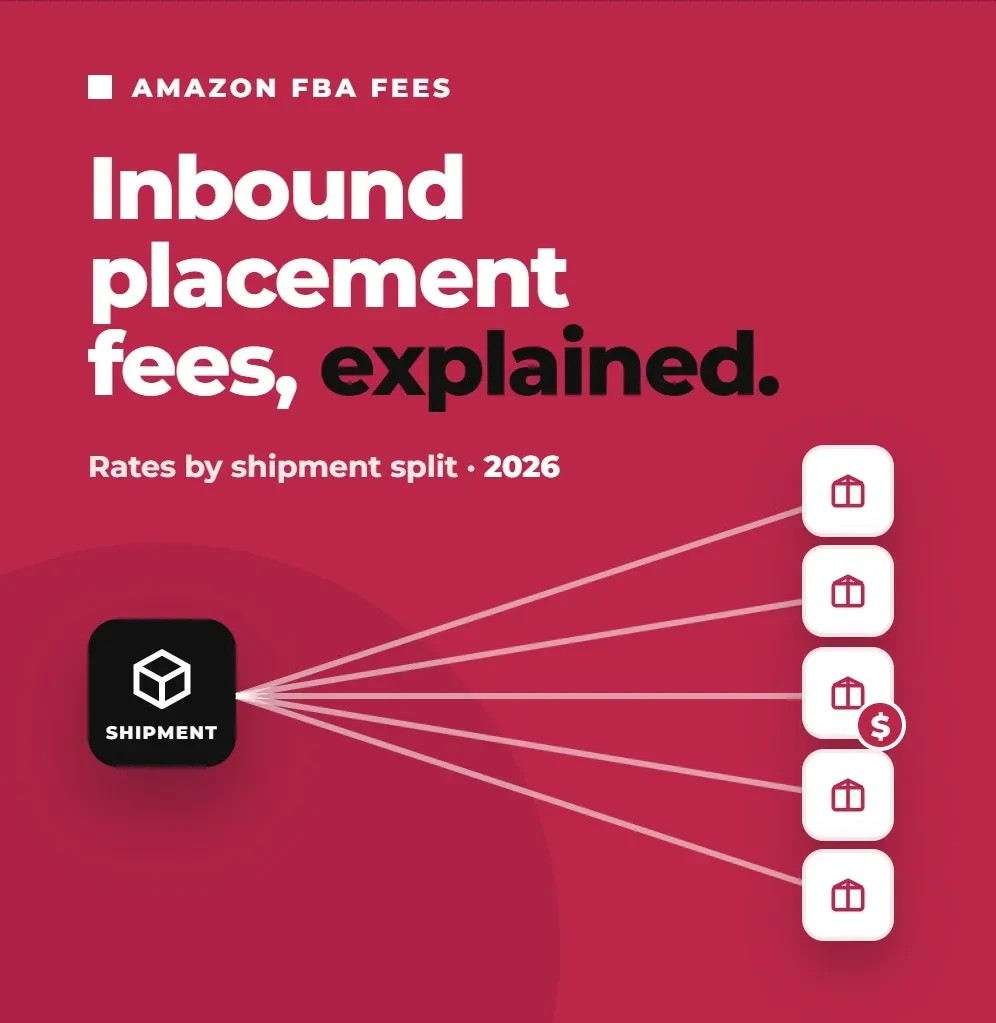
Placement options are where the real money is. Amazon Managed Placement bundles inbound placement fees, while Minimal Shipment Splits does not.
FBA enrollment is required, along with a minimum monthly Sponsored Products budget.
The 2026 customs environment changed the calculations. De minimis is gone, the tariff structure has changed repeatedly, and importer of record rules tightened in June.
AGL suits predictable replenishment into Amazon. Freight forwarders remain stronger for flexibility, multi-channel inventory, and problem-solving.
Model landed cost, not freight cost. A cheaper ocean rate on an incorrectly classified shipment is not a saving.
A container leaves Shenzhen on schedule. Amazon Global Logistics booked the freight, arranged the pickup, cleared the export, and assigned a customs broker at the destination port.
The entry is held anyway, because the HTS code on the commercial invoice was wrong.
Amazon arranged the clearance. The liability for the misclassification sits with the seller, because the seller is the importer of record. That distinction is the single most misunderstood thing about AGL, and in 2026 it is considerably more expensive to misunderstand than it was two years ago.
This guide covers what Amazon Global Logistics actually does, who can use it, how booking works, what it costs, what it does not cover, and the cases where an independent freight forwarder remains the better choice.
What is Amazon Global Logistics?
Amazon Global Logistics, usually shortened to AGL, is Amazon's door-to-door ocean and air freight program for FBA sellers. It is part of a wider set of services Amazon calls Amazon Supply Chain Services.
In practice, it lets you book freight from your supplier's facility in Asia directly into Amazon's fulfillment network, and manage the whole thing from Seller Central rather than coordinating separately with a forwarder, a customs broker and a trucking company.
What the AGL price covers
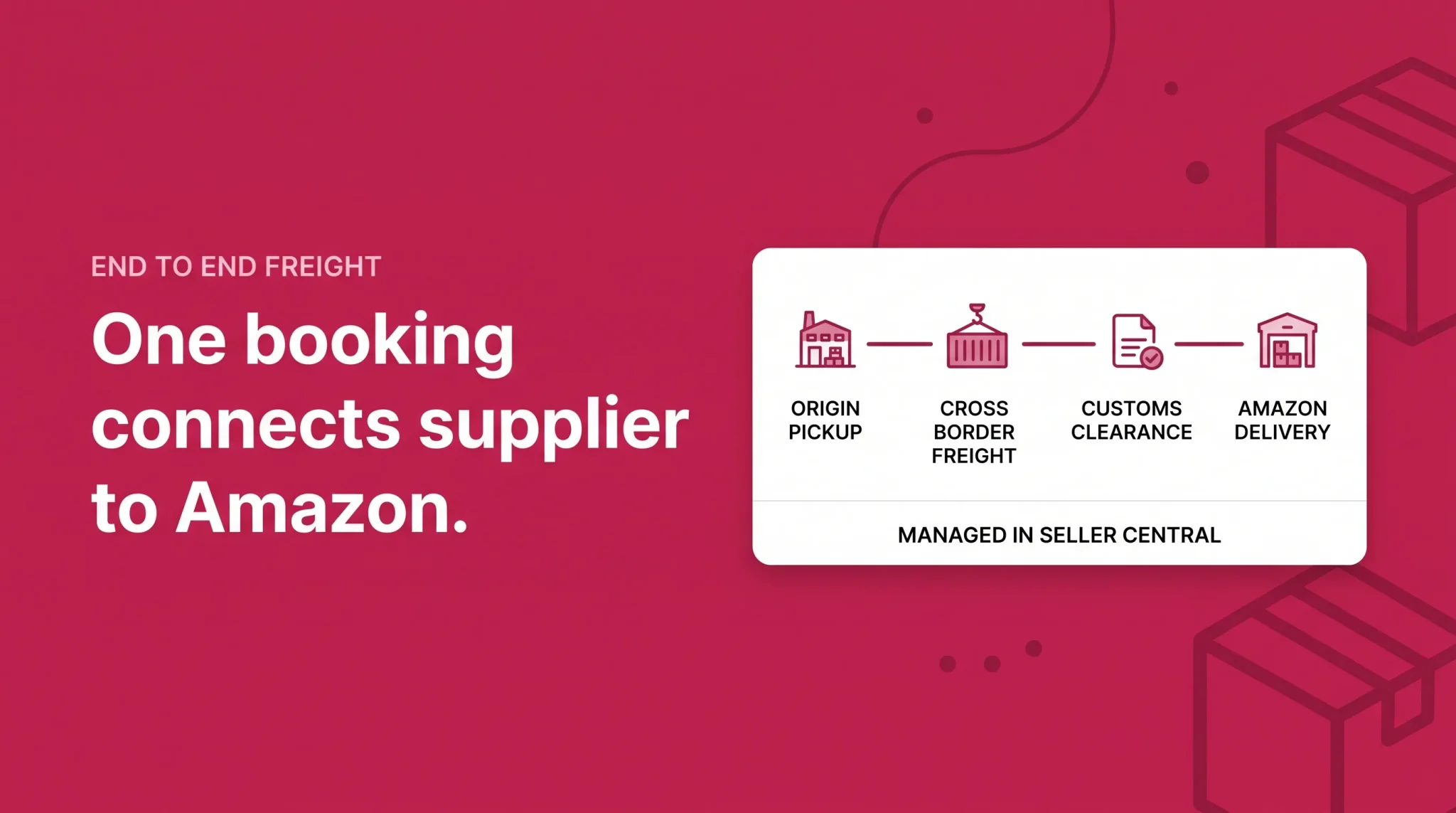
Amazon's pricing is quoted as an end-to-end service covering each step of the journey:
The quote covers pickup at origin from your facility or your supplier's, the export declaration, cross-border ocean or air transportation, destination customs clearance using brokers Amazon provides, and final delivery to an Amazon fulfillment center or AWD facility.
Optional services available at booking include drayage, palletization, labeling and cargo insurance.
Where AGL ships
The origins are mainland China, Hong Kong and Vietnam. Destinations are the US, UK, France, Germany, Italy, Spain and Japan.
Shipping to Amazon Warehousing and Distribution rather than straight to FBA is currently available for China to US only. That route handles cross-border transport, clearance, bulk storage and automatic replenishment into FBA when your fulfillment center inventory runs low.
Who can use AGL: eligibility and requirements
AGL eligibility is simpler than most Amazon programs, but there are two conditions worth knowing before you invest time in onboarding.
You must be enrolled in Fulfillment by Amazon. AGL exists to move inventory into Amazon's network. It is not a general freight service.
There is a minimum advertising commitment. Amazon's program terms specify a minimum monthly Sponsored Products budget of 100 in your local currency. This surprises sellers who expected a freight service to have freight-based qualification criteria.
Beyond that, eligibility is broad. There is no published container-volume floor, contrary to what some seller blogs claim. Amazon also offers an 8% discount on base ocean freight rates for 60 days after onboarding, available to new FBA sellers setting up an AGL profile.
Who AGL actually suits
The program fits best where your inventory is going to Amazon and mostly staying there, replenishment is reasonably predictable, and your suppliers sit in covered origin markets. It suits sellers who would rather trade rate negotiation for administrative simplicity, and those without an established forwarder relationship worth protecting.
It fits worst where inventory is split across channels, where lanes change often, or where you need someone to pick up the phone when a shipment goes sideways. More on that further down.
AGL service options
Standard Ocean freight
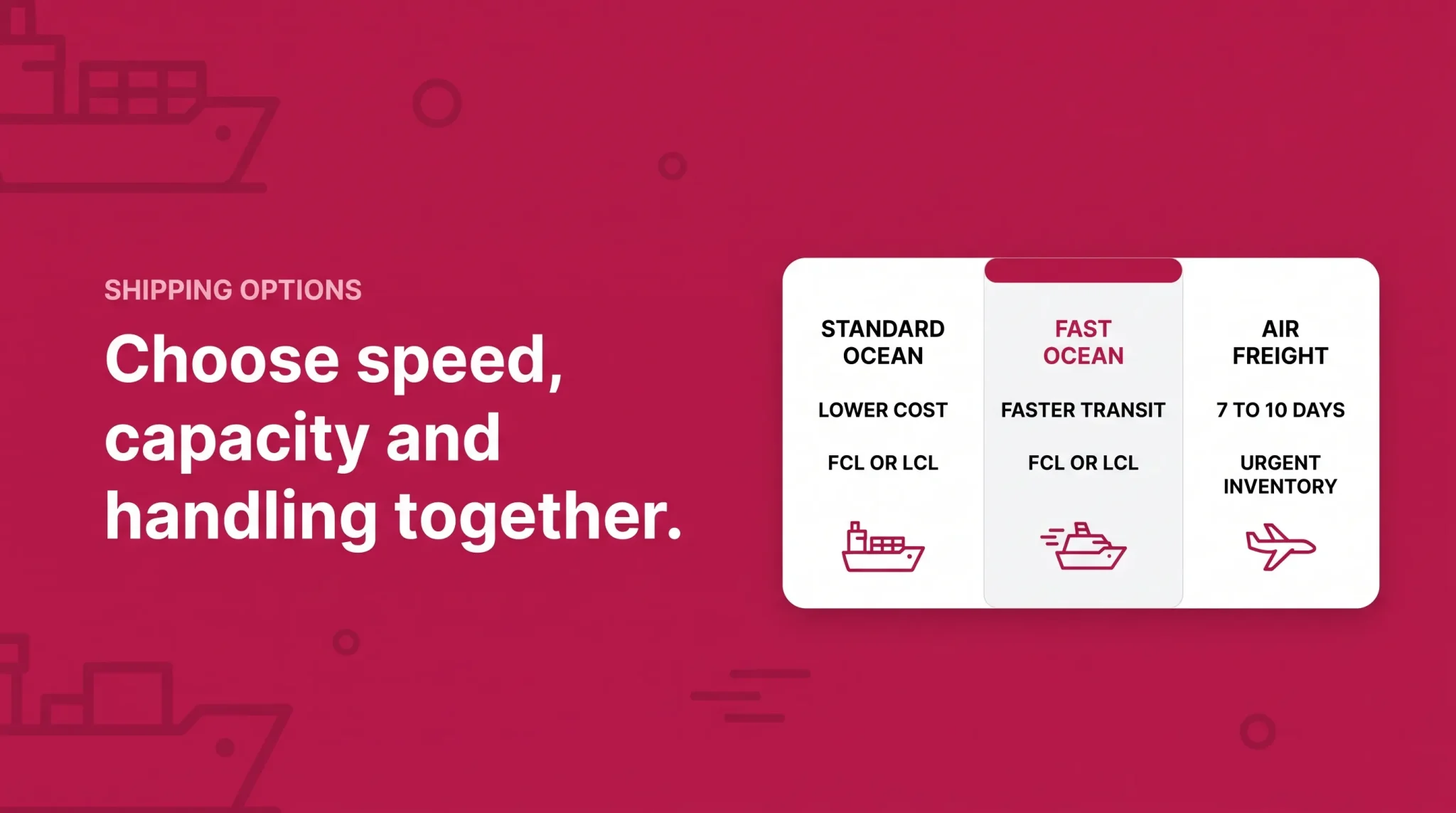
The most cost-effective option, available as full container load (FCL) or less than container load (LCL), to all supported destinations. Cargo can be floor loaded or palletized.
Standard Ocean is the only service tier available for shipments into the UK, EU and Japan.
Fast Ocean freight
Expedited ocean, available FCL or LCL, with faster transit than Standard Ocean and lower cost than air. Currently a US-destination service. Useful for regular replenishment where air is too expensive to justify but Standard Ocean cuts your buffer too fine.
Air freight
Amazon quotes air freight as reaching the fulfillment network within 7 to 10 days, which is the fastest entry AGL offers. It is the right tool for high-value goods, genuine stockout emergencies, and launch inventory where being live matters more than landed cost.
It is the wrong tool for routine replenishment. Sellers who find themselves flying inventory repeatedly usually have a forecasting problem rather than a freight problem.
FCL vs LCL
FCL gives you the whole container. You get more flexibility on cargo types and sizes, less handling, and better transit times. It makes sense once your volume genuinely fills a container, because you pay for the box either way.
LCL shares container space with other Amazon sellers' inventory. Amazon consolidates and ships directly to fulfillment centers. You ship the volume you actually need without waiting to accumulate a full container, which is better for cash flow and for inventory health.
Floor loading vs palletizing
Floor loading places cargo directly into the container with no pallets. It maximizes usable container space and lowers cost per unit shipped. Palletizing costs more space but reduces handling damage and speeds unloading.
For most consumer goods in sturdy cartons, floor loading is the better economics. For fragile or heavy items, pay for the pallets.
Inventory placement options, the part most guides skip
This is where AGL either saves you real money or quietly costs you some, and it is barely covered anywhere outside Amazon's own documentation.
Amazon Managed Placement
Amazon splits and optimizes your inventory across multiple US fulfillment centers for you. It is a flat, all-inclusive, per-shipment rate that includes destination charges required for placement, which means you are not charged the FBA inbound placement service fee separately.
You also do not need to split purchase orders across destinations. Amazon handles the distribution.
The constraint to watch: no more than 2,000 cartons per 40-foot container and 1,000 cartons per 20-foot container. If your carton count per container runs above those limits, Managed Placement is not available to you, and finding that out at booking is better than finding it out at the port.
Available for large bulky and standard inventory, LCL or FCL, on Standard Ocean or Fast Ocean.
Seller Managed Placement
You send products directly to regional Amazon facilities, which eliminates inbound placement service costs and gives you more control over distribution.
To qualify you need standard inventory, an LCL or FCL shipment on Standard or Fast Ocean, and at least five identical box quantities per item. That last condition rules out a lot of mixed shipments.
Minimal shipment splits
Ships inventory of the same sort type to a single US fulfillment center, getting it closer to your destination port.
This option does incur FBA inbound placement service costs. Amazon's own guidance is that it can still work out cheaper for containers with lower unit densities, because a single inbound placement on a low-density container can cost less than the bundled alternative.
Which to choose
There is no universal answer, and anyone telling you otherwise has not run the numbers on your cartons. The decision turns on unit density per container, carton counts, and how many identical box quantities you are shipping. Model all three against a real upcoming shipment rather than choosing once and defaulting forever.
How to book an AGL shipment
Enroll in FBA if you have not already.
Create an Amazon Global Logistics profile in Seller Central.
Set up a payment method.
Submit your importer of record details and upload required documents. This step requires approval, and it is the one that takes time. Start it well before you need to book.
Book the shipment through the Send or replenish inventory workflow in Seller Central.
Track through Seller Central or the Shipper Central portal, including customs clearance status.
The booking itself is straightforward once the profile is approved. The IOR approval in step four is the bottleneck, and it is also the step that most sellers underestimate, for reasons the next section covers.
Customs, duties and who is legally responsible
Read this section even if you skim the rest.
Amazon is not your importer of record
Amazon does not act as the importer of record for FBA inventory, for any shipment of any size or value. Naming Amazon as IOR gets the shipment rejected.
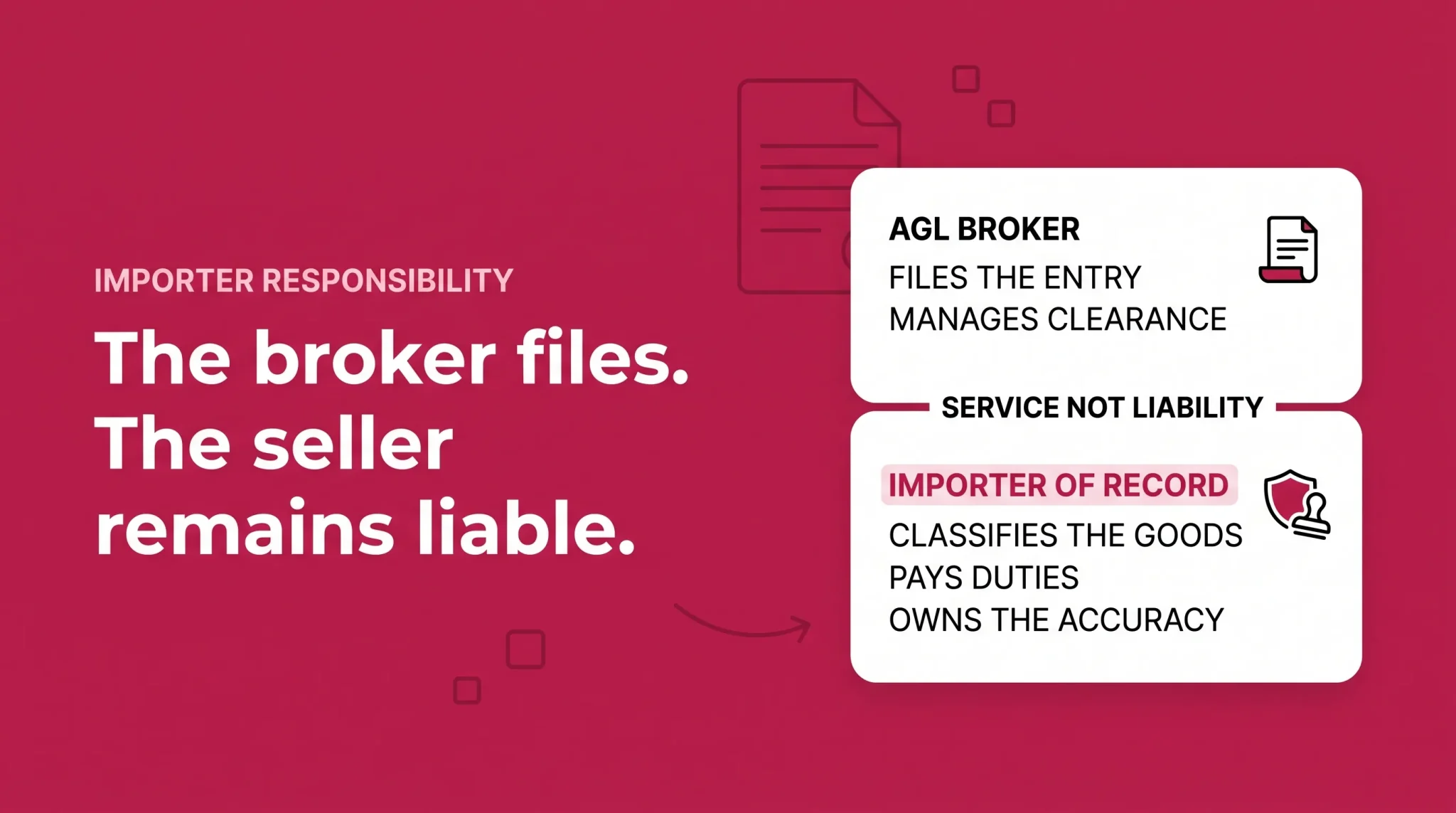
AGL provides customs brokers at origin and destination. A broker files on your behalf. That is a service, not a transfer of liability.
The importer of record is the legally accountable party to US Customs and Border Protection for the declared value of the goods, the tariff classification, the country of origin, payment of duties and applicable tariffs, and the accuracy of the entry as a whole. Note that country of origin means where the product was substantially transformed, not where it shipped from.
That party is you, or a designated importer of record acting on your behalf. Amazon's onboarding asks for your IOR details precisely because it is not going to be Amazon.
What changed in 2026
Three developments made this materially more consequential.
De minimis is effectively gone. The $800 Section 321 duty-free threshold was suspended for China and Hong Kong on 2 May 2025, and for all other origins on 29 August 2025. Most commercial FBA shipments now require a formal customs entry with duties paid regardless of value. The Court of International Trade upheld the suspension for China, Mexico and Canada on 13 August 2026.
The tariff stack has moved repeatedly. The Supreme Court ruled in February 2026 that IEEPA does not grant tariff authority, invalidating that program, and CBP stopped collecting those duties. A temporary 10% Section 122 global surcharge took effect on 24 February 2026 and expired at its 150-day statutory limit on 24 July 2026. It was replaced the same day by a new Section 301 forced-labor duty covering roughly 60 countries, with China in a 12.5% tier. Longstanding Section 301 duties of 7.5% to 25% on Chinese goods were never affected by any of this and continue to stack on top, as do Section 232 duties on metals. USTR opened further Section 301 investigations in March 2026.
Importer of record rules tightened. Executive Order 14411, "Strengthening Customs Enforcement," was signed on 3 June 2026. It restricts foreign importers of record and the shell structures used to create them, requires a designated IOR backed by a bond or sufficient domestic assets, increases minimum bond coverage, expands importer disclosures, establishes a CBP good standing standard based on compliance history, and sets a penalty floor.
What this means practically: duty rates are a moving target and anyone quoting you a single fixed percentage is quoting a snapshot. Confirm your current rate with a licensed customs broker against your specific HTS codes before every significant purchase order, and keep your entry records. There is an open refund process for importers who paid the invalidated IEEPA duties.
ISF filing and classification
Two responsibilities that stay yours regardless of who books the freight:
Importer Security Filing must be filed accurately and on time for ocean shipments. Late or inaccurate filings carry penalties that start in the thousands per violation.
HTS classification is the importer's responsibility. A broker will file the code you give them or the one they derive from your product description, but the legal duty to classify correctly sits with the IOR. Getting a binding ruling from CBP on an ambiguous product is cheap compared to a reclassification assessment two years later.
A note on scope: this article explains how the system works. It is not customs or legal advice, and Flairox is not a licensed customs broker. For classification, valuation, bonds and entity structuring, work with a licensed broker or trade attorney.
What Amazon Global Logistics costs
AGL quotes an end-to-end rate rather than a stack of line items, which is much of its appeal. Rates vary by lane, service tier, season and container type, so any specific per-cubic-meter figure published in an article is stale within weeks. Get a live quote in Seller Central.
What matters more is knowing which costs sit inside the quote and which do not.
Inside the AGL rate you get origin pickup and export declaration, ocean or air transport, destination customs clearance service, and delivery to the fulfillment center or AWD. Inbound placement fees are included too, provided you use Amazon Managed Placement or ship to AWD.
Outside the AGL rate sit duties and tariffs, which in the current environment are frequently the largest single line on the whole shipment. So do customs bonds, which carry higher minimums since June 2026, and prep and labeling, since Amazon stopped providing those for US FBA shipments on 1 January 2026. Cargo insurance and optional services such as palletization and drayage are chargeable add-ons at booking, and FBA inbound placement is billed separately if you use minimal shipment splits.
The discount worth knowing about: 8% off base ocean freight rates for 60 days after onboarding, for new FBA sellers creating an AGL profile.
Model landed cost, not freight cost
The most common financial mistake with AGL is comparing Amazon's ocean rate against a forwarder's ocean rate and calling that the analysis.
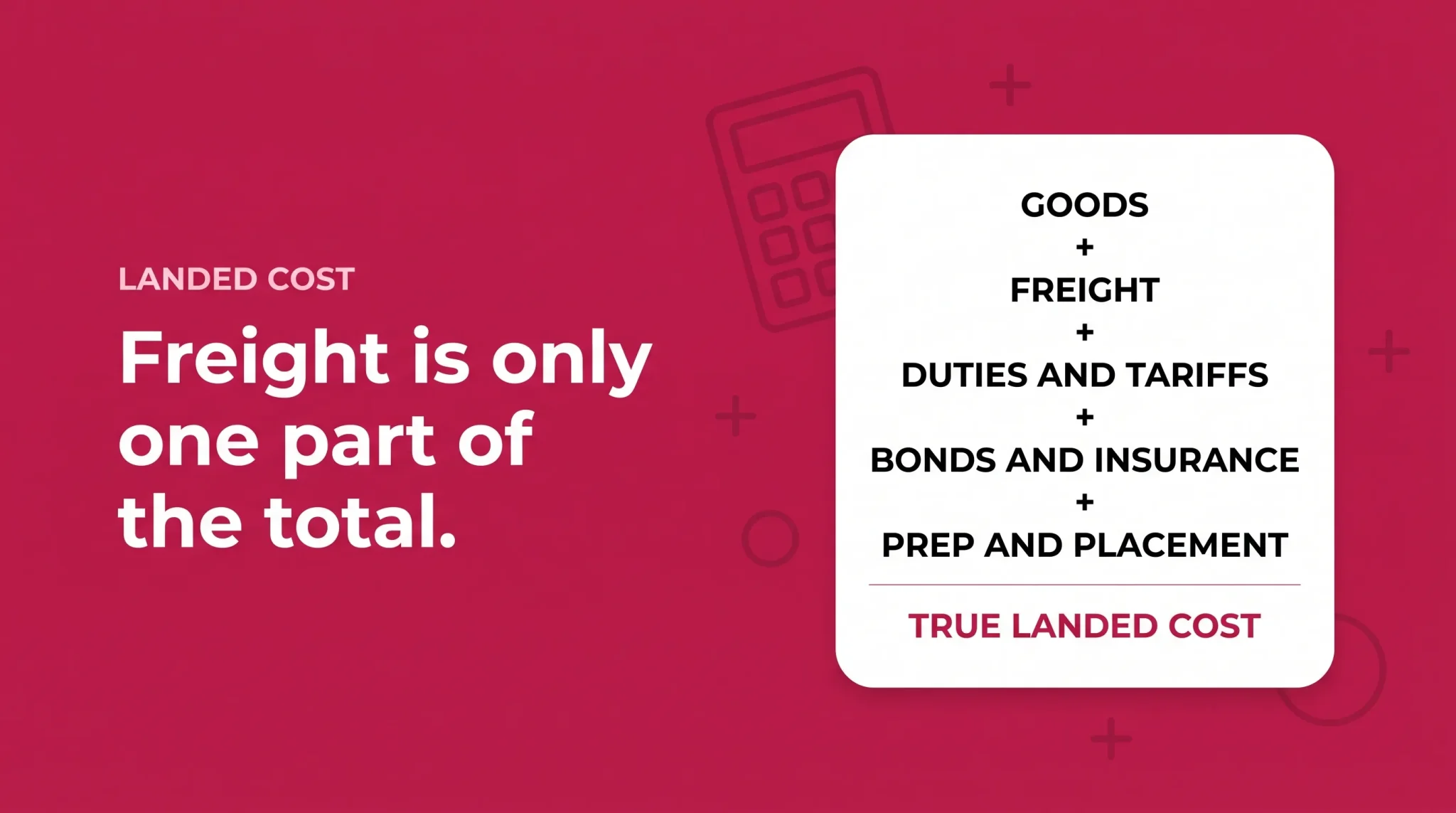
Landed cost is goods, freight, duties, tariffs, bonds, prep, placement and insurance. Duties alone can add a quarter to nearly half of goods value depending on origin and category. A freight rate that is 10% better on a shipment where duties are 35% of cargo value is not where your margin is decided.
Timelines and tracking
Be realistic about transit times, because published figures vary enormously depending on what is being measured.
One freight guide gives China to US West Coast as 14 to 34 days, a 20-day spread inside a single article. Flexport, which measures from cargo ready date at the exporter's factory to the container's departure from the destination port, put the same lane at 37 days in the week to 23 March 2026, and 53.3 days to the East Coast.
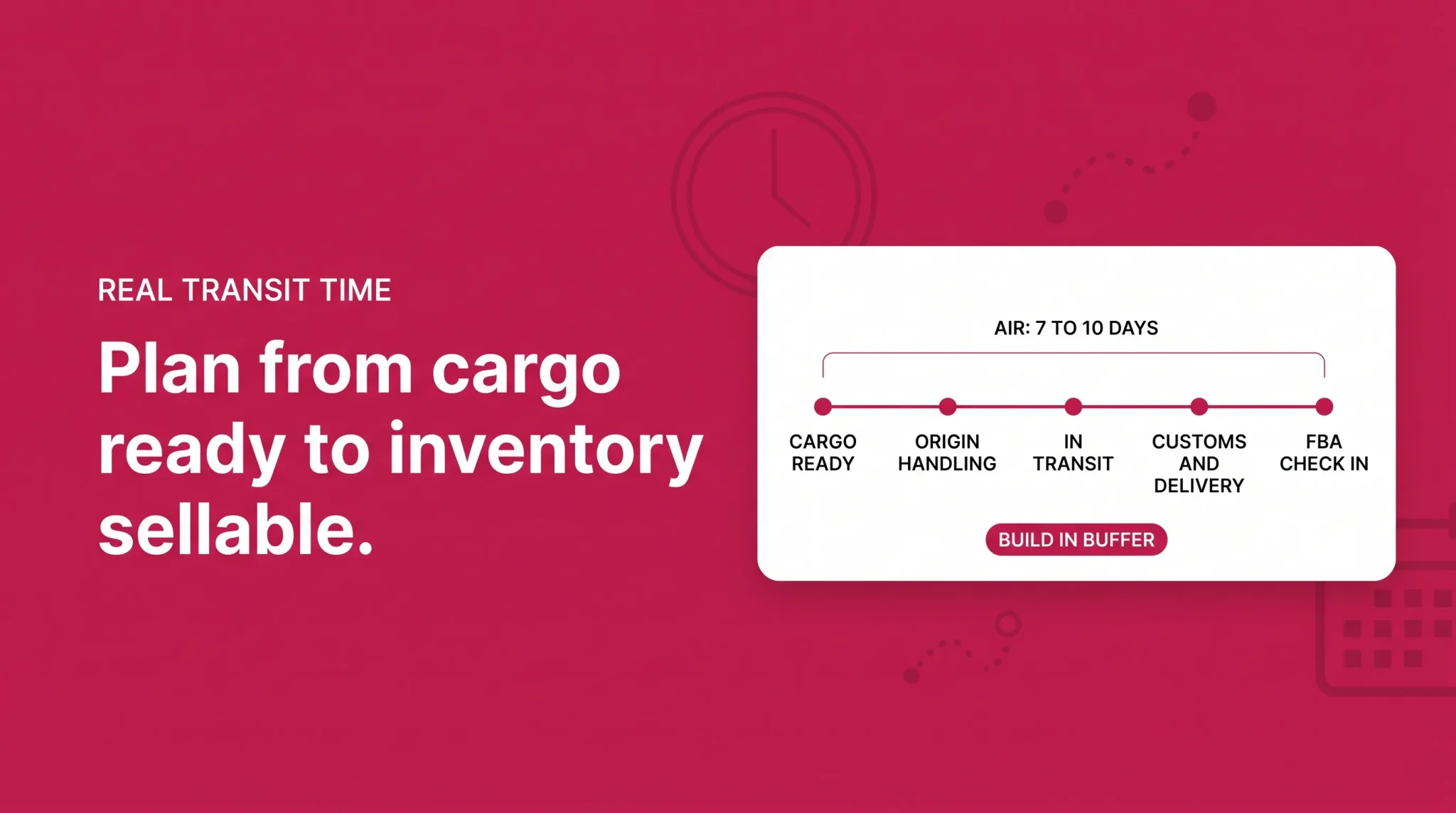
Both are accurate. They measure different things. Port-to-port transit is not the number you should plan against. Plan against cargo-ready to sellable, which includes booking lead time, origin consolidation, transit, clearance, drayage, fulfillment center appointment, and check-in.
For air freight, Amazon quotes 7 to 10 days into the network.
Tracking runs through Seller Central or the Shipper Central portal, with shipping status updates, notifications and customs clearance visibility. Integrated tracking is a genuine advantage over coordinating status across a forwarder portal, a broker email thread and Amazon's inbound dashboard.
Whatever your lane, build buffer. Ocean freight has been unpredictable for several years and 2026 has not been the exception.
AGL vs an independent freight forwarder
Factor | Amazon Global Logistics | Independent forwarder |
|---|---|---|
Booking | Inside Seller Central | Separate portal or email |
Rate negotiation | Published rates, limited negotiation | Negotiable, improves with volume |
Lane flexibility | Covered origins and destinations only | Any lane |
Non-Amazon destinations | No | Yes |
Inbound placement fees | Bundled under Managed Placement | Charged separately |
Customs brokerage | Provided | Provided or arranged |
Importer of record | Still you | Still you |
Problem resolution | Portal and support queue | Named contact, usually |
Prep and labeling | Optional add-on | Often bundled with a prep facility |
When AGL is the right call
Single-channel FBA sellers get the cleanest benefit, because inventory goes to Amazon and stays there. Regular replenishment cycles on stable lanes are exactly what the program was built for, and consolidating freight, clearance and delivery into one relationship has real administrative value if you are tired of coordinating three vendors.
Two other cases favor AGL. If inbound placement fees are eating into your margin, Managed Placement bundling can be worth more than any rate difference you would negotiate elsewhere. And if you are new to importing, guardrails are often more valuable than optionality.
When to stay with a forwarder
If you sell across channels, an Amazon-only program is the wrong routing for inventory that also needs to reach a retail account and your own 3PL. The same applies if your lanes fall outside AGL coverage, since sourcing from India, Thailand or Mexico puts you outside the origin list entirely. At container scale, volume gives you leverage, and negotiated forwarder rates paired with a good broker often beat published rates.
The strongest argument for keeping a forwarder is accountability when something goes wrong, which is also the most common complaint about AGL. A portal ticket is not the same as a forwarder who knows your account and can escalate at the terminal, and when a container is stuck, relationships move faster than queues. Exception handling more broadly, meaning rerouting, holding cargo and splitting shipments mid-journey, is where independent forwarders earn their margin.
Running both is a legitimate strategy
Plenty of established sellers use AGL for predictable Amazon replenishment on covered lanes and keep a forwarder for everything else. This gives you a live rate benchmark in both directions and removes single-provider dependency at exactly the moment dependency is expensive.
Common AGL mistakes
The costliest mistake is assuming Amazon carries the customs risk. Brokerage is a service, not an indemnity, and the related error is starting importer of record setup at booking time rather than weeks ahead, since it requires approval. Guessing HTS codes belongs in the same category. The cheapest hour you will spend on importing is with a broker classifying your catalog properly.
Operationally, watch three things. Shipping unlabeled inventory no longer works, because Amazon stopped prepping and labeling US FBA shipments on 1 January 2026. Our guide to Amazon FBA prep requirements covers what that means for your supplier instructions. Breaching the Managed Placement carton limits of 2,000 per 40ft and 1,000 per 20ft will disqualify you at booking. And choosing a placement option once and never revisiting it costs money quietly, because the right choice moves with unit density and carton count.
Financially, plan cargo-ready to sellable rather than port to port, compare landed costs rather than freight rates, and keep buffer stock while you switch providers. Changing freight partners mid-replenishment cycle is how inventory health problems start.
Decide on freight with landed cost, not freight cost
Amazon Global Logistics is a capable program that solves a real problem. Booking freight, clearance and fulfillment center delivery in one place, with placement fees bundled and tracking integrated, removes genuine friction from a part of the business that generates a lot of it.
What it does not do is take importing off your plate. The importer of record obligation stays with you, the duty exposure stays with you, and in the 2026 environment those carry far more financial weight than the ocean rate does. Sellers who evaluate AGL as a freight decision tend to get the decision half right.
The right approach is to model a real upcoming shipment end to end, including duties, placement, prep and bonds, with AGL and with your forwarder, and let the landed cost decide. Then revisit it, because the inputs keep moving.
Flairox helps brands make those calls with the numbers in front of them. Our Amazon marketplace management service covers inbound strategy, inventory planning, and the operational compliance that determines whether stock arrives sellable or sits in problem solve.
If you are weighing AGL against your current setup, we will model your landed cost both ways and tell you which is actually cheaper for your catalog. Talk to the Flairox team.
Tariff and customs rules referenced in this article were accurate as of September 2026 and have changed several times in the preceding year. Confirm current rates and requirements with a licensed customs broker before committing to a purchase order. This article is informational and is not customs, legal or tax advice.
Frequently asked questions
Yes, AGL provides customs brokers at origin and destination. That is a brokerage service. Legal responsibility for the entry stays with the importer of record.