 Raahim Sheikh

Key takeaways
A Plan of Action has three parts: root cause, corrective actions already completed, and preventive measures now in place.
Investigation wins appeals, not writing. Most rejections come from missing or mismatched evidence rather than poor prose.
Appeals route through the Account Health Dashboard now, and some violation types use a guided form rather than free text.
Corrective actions must be completed, not promised. Amazon reads future tense as an admission you have not fixed it.
Preventive measures must be systemic. Process changes, not intentions to be more careful.
Seller Challenge is a genuine second review for Account Health Assurance sellers, but only for listing-level enforcement and only after a standard appeal.
Never fabricate documents. Falsified invoices end accounts permanently and carry legal exposure.
Some cases need a lawyer, not a template. Section 3, fraud allegations, and related-account matters are the main ones.
Your account deactivated this morning. Orders stopped, the dashboard is showing a notification you have read four times, and the instinct is to find a template, fill in your business name and send something within the hour.
That instinct is what gets most appeals rejected.
Amazon reviewers read hundreds of Plans of Action a day and recognize recycled template language immediately. A generic appeal does not just fail. It costs you days you cannot afford and makes the second attempt harder, because you have already shown that you did not diagnose the problem.
This guide gives you a real Plan of Action template, two worked examples, and the evidence each violation type requires. It also covers the part that actually decides the outcome, which is the investigation you do before writing a single sentence.
What an Amazon Plan of Action is
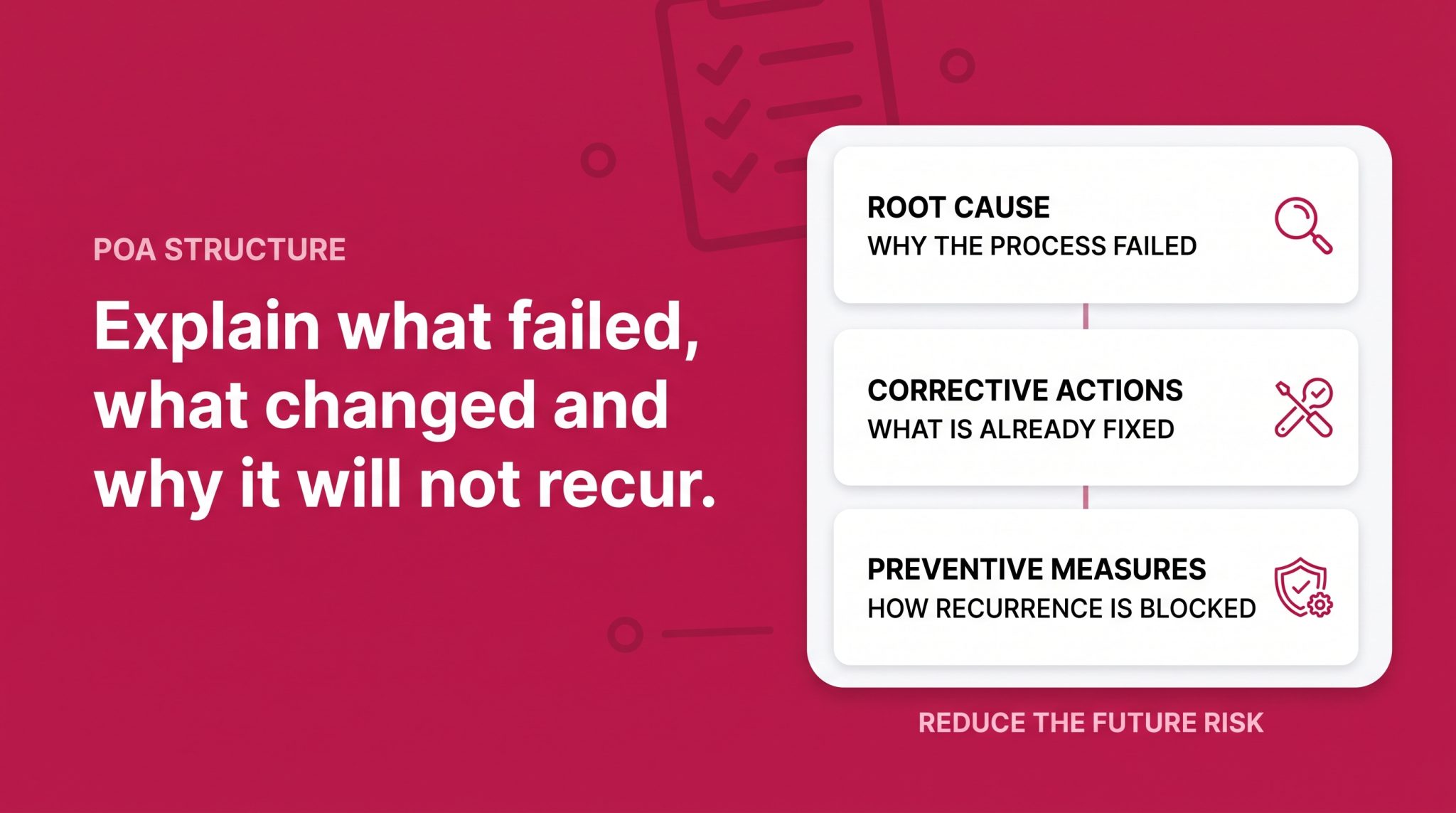
A Plan of Action, often shortened to POA, is the document Amazon asks for when it deactivates an account or a listing. It is not a letter of apology and it is not a negotiation. It is a structured explanation with three specific sections that a reviewer is reading for in order.
Root cause. What specifically went wrong, and why it was able to happen.
Corrective actions. What you have already done to resolve the problem.
Preventive measures. What has changed in how your business operates so the same failure cannot recur.
Amazon asks for this structure because it is assessing risk rather than fairness. The reviewer is answering one question: if we turn this account back on, does the behavior repeat? Everything in your POA either helps them answer no, or it is noise.
That framing explains most of the rules that follow. Apologies do not reduce risk. Explanations of how much the suspension is hurting you do not reduce risk. Evidence that you found the broken process and closed it does.
Before you write anything, read the notice properly
The single most common reason a POA fails is that it answers a different question than the one Amazon asked.
Open the notification and write down, exactly as they appear, the enforcement type and policy cited, the violation ID, the specific ASINs or order IDs referenced, and the date of the notice. If Amazon quotes particular complaints or metrics, record those verbatim too.
Enforcement generally falls into one of a few buckets, and they call for very different appeals. Performance covers order defect rate, late shipment rate, cancellation rate and valid tracking rate. Product policy compliance covers restricted products, safety and listing rule breaches. Product authenticity and condition covers inauthentic complaints, used sold as new and IP claims. Business and identity verification covers document mismatches and related-account flags. Section 3 covers alleged deceptive or fraudulent activity and is the most serious category.
If your notice is ambiguous, do not guess. A POA built on the wrong assumption wastes an attempt.
How appeals are submitted in 2026
The routing changed, and a lot of advice still describes the old flow.
There is no longer a general "Appeal Decision" button covering everything. Most enforcement now runs through Performance → Account Health in Seller Central, where you click Reactivate your account, or Submit Appeal next to the specific violation. Some violation types now present a guided form with defined fields rather than an open text box, which changes what you are actually writing. Read the fields before drafting, because a long narrative pasted into a short field helps nobody.
Listing-level issues are appealed by clicking into the affected ASIN under Product Policy Compliance and appealing there rather than at account level.
Section 3 matters, identity verification and related-account flags are directed to their own paths from the dashboard. These frequently involve video verification and several rounds of document requests before resolution, which is normal for the category rather than a sign the appeal is failing.
Amazon's stated turnaround for many appeals is around three to five business days. Intellectual property and authenticity cases commonly run longer. Separately, be aware that funds can be held for up to 90 days while a deactivation is being resolved, so plan cash flow on that basis rather than on an optimistic reinstatement date.
One process rule worth stating plainly: do not submit a second appeal while the first is still under review. It does not accelerate anything and it can confuse the case record.
Investigate before you draft
This is the part most sellers skip and the part that decides the outcome.
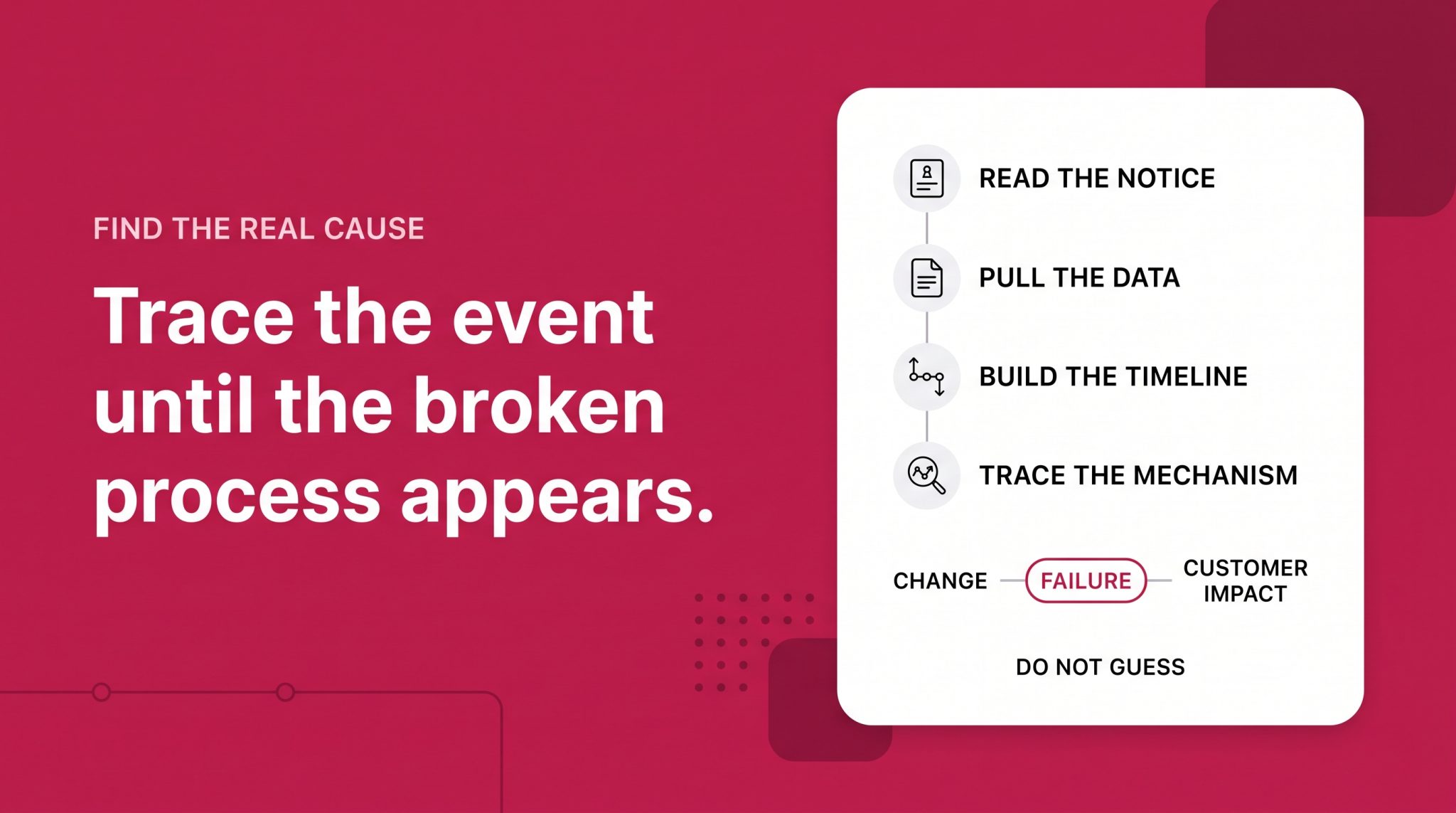
Start by pulling the underlying data rather than relying on memory. For performance cases, that means the relevant reports covering the period Amazon cited, so you can see which orders failed and what they had in common. For complaint-driven cases, it means reading the actual customer or rights-owner complaints, tracing them back to specific orders, and identifying which inventory batch, supplier or listing they came from.
Then build a timeline. When did the problem start, what changed in your business around that point, and when did the complaints appear. Causes are usually visible as a change: a new supplier, a new warehouse, a staff departure, a listing edit, a shift in shipping method, a seasonal volume spike your process could not absorb.
Then trace the mechanism. Not "we received inauthentic complaints" but why those particular units reached those particular customers without the problem being caught. That question, answered honestly, is your root cause.
If you cannot find the cause, keep looking rather than inventing one. A confident, specific and wrong root cause reads to a reviewer exactly like a made-up root cause, because that is what it is. It is better to spend another day on the investigation than to burn an attempt on a guess.
Section one: root cause
What Amazon means by root cause
Amazon wants the specific failure in your process that allowed the violation, not a restatement of the violation itself.
"We received complaints about product authenticity" is the violation. "We listed units from a secondary distributor without requiring an invoice trail to the brand, because our sourcing process only required invoices for new suppliers and this distributor was already approved for a different product line" is a root cause. The second one tells a reviewer exactly where the hole is and, by implication, what closing it would look like.
Why vague causes fail
Statements like "human error," "an oversight," "we will be more careful" or "process improvements are needed" all signal the same thing to a reviewer: the seller has not diagnosed the problem. If the cause is a person being careless, the fix is that person promising to be less careless, which is not a fix at all. Amazon knows this, which is why generic causes lead to generic rejections.
On blaming suppliers and carriers
Sometimes a supplier genuinely did deceive you, or a carrier genuinely did fail. You can say so, factually and briefly. What you cannot do is stop there.
Amazon's position is that you chose the supplier, you chose the carrier, and you owned the process that let their failure reach a customer. A root cause that ends with "our supplier misled us" reads as deflection. The same fact framed as "we relied on supplier assurances without verifying documentation, and had no incoming inspection step that would have caught it" reads as ownership, and it points directly at a fixable process.
Root cause template
Root cause
On [date or date range], [specific number] of our orders for [ASIN or product] resulted in [specific enforcement trigger, quoted from the notice]. Our investigation identified the following cause.
[Describe the specific process that failed. Name the step, not the person.] Specifically, our [sourcing / fulfillment / listing / quality control] process [required X but did not require Y / relied on Z without verification / had no step covering W].
This meant that [describe exactly how the failure reached the customer or triggered the policy breach].
[If a third party contributed, state it factually in one sentence, then return immediately to what your own process failed to catch.]
We take full responsibility for the process gap that allowed this.
Worked example
Root cause
Between 3 and 22 March 2026, eleven orders for ASIN B0XXXXXXXX generated late shipment notifications, taking our Late Shipment Rate to 8.2% against the 4% threshold.
Our investigation found that the cause was our handling time setting rather than our warehouse throughput. In February we moved fulfillment from our own facility to a third-party warehouse with a later daily cutoff time of 11am, but we did not adjust the handling time on our listings, which remained set at one business day. Orders placed after 11am were therefore physically shipped on the second business day while the listing had promised the first.
The volume increase over that period made the gap visible, but the setting had been incorrect since 9 February. No alert existed because our process had no step requiring listing settings to be reviewed when fulfillment arrangements change.
Note what that does. It is specific, it names a mechanism rather than a feeling, it gives dates and numbers, and the fix is obvious from reading it.
Section two: corrective actions
Completed, not promised
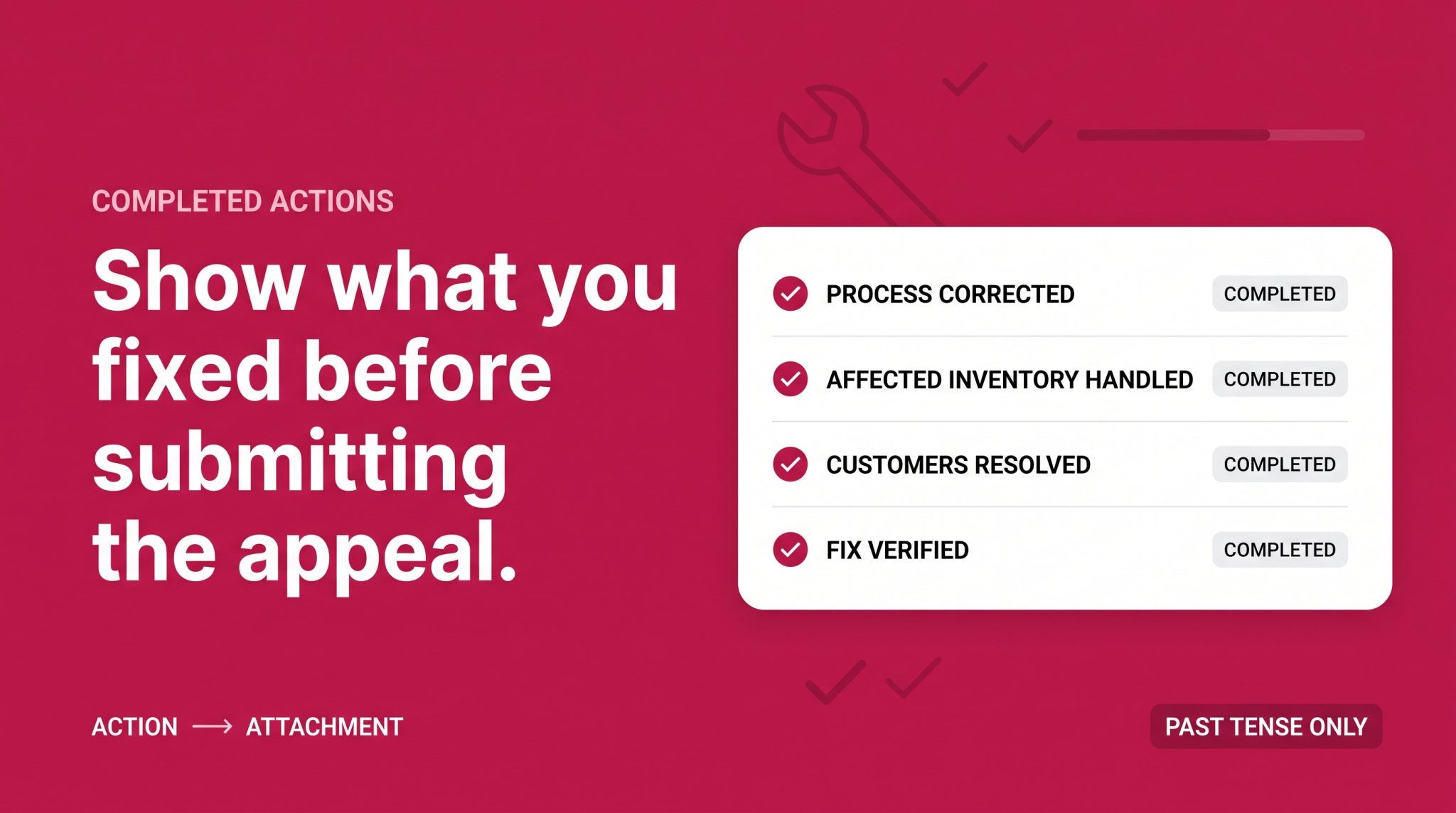
This section describes what you have already done. Future tense here is fatal, because "we will implement" tells the reviewer the problem is still live at the moment they are deciding whether to reinstate you.
Work through the immediate consequences of your root cause and fix each one before you submit. That usually means correcting the setting, listing or process that failed, dealing with affected inventory, resolving affected customers, and removing anything non-compliant from your catalog.
Each claim should be something you can evidence. If you say you removed affected inventory, you should be able to show the removal order. If you say you refunded customers, you should be able to show the refunds.
Corrective actions template
Corrective actions taken
We have completed the following actions as of [date].
[Immediate fix to the failed process. State what was changed, from what to what, and on what date.]
[Action taken on affected inventory or listings. Include quantities, ASINs and dates.]
[Action taken for affected customers, if applicable.]
[Verification step confirming the fix worked, with the result.]
Supporting documentation for each action is attached as [list attachments].
Worked example
Corrective actions taken
We have completed the following actions as of 28 March 2026.
On 24 March we updated the handling time on ASIN B0XXXXXXXX and all 46 other ASINs fulfilled from the same warehouse from one business day to two business days, reflecting the actual 11am cutoff. Screenshots of the updated settings are attached.
On 25 March we reviewed every order shipped since 9 February and identified the eleven affected orders. All eleven customers were contacted and refunded the shipping cost. The order IDs and refund confirmations are attached.
On 26 March we audited all remaining listings across the account and confirmed that handling times now match the fulfillment capability for each fulfillment location. The audit record is attached.
Between 24 and 28 March we shipped 94 orders with zero late shipments, confirming the corrected setting is working. The relevant report extract is attached.
Point four is doing real work there. It is evidence that the fix is not theoretical.
Section three: preventive measures
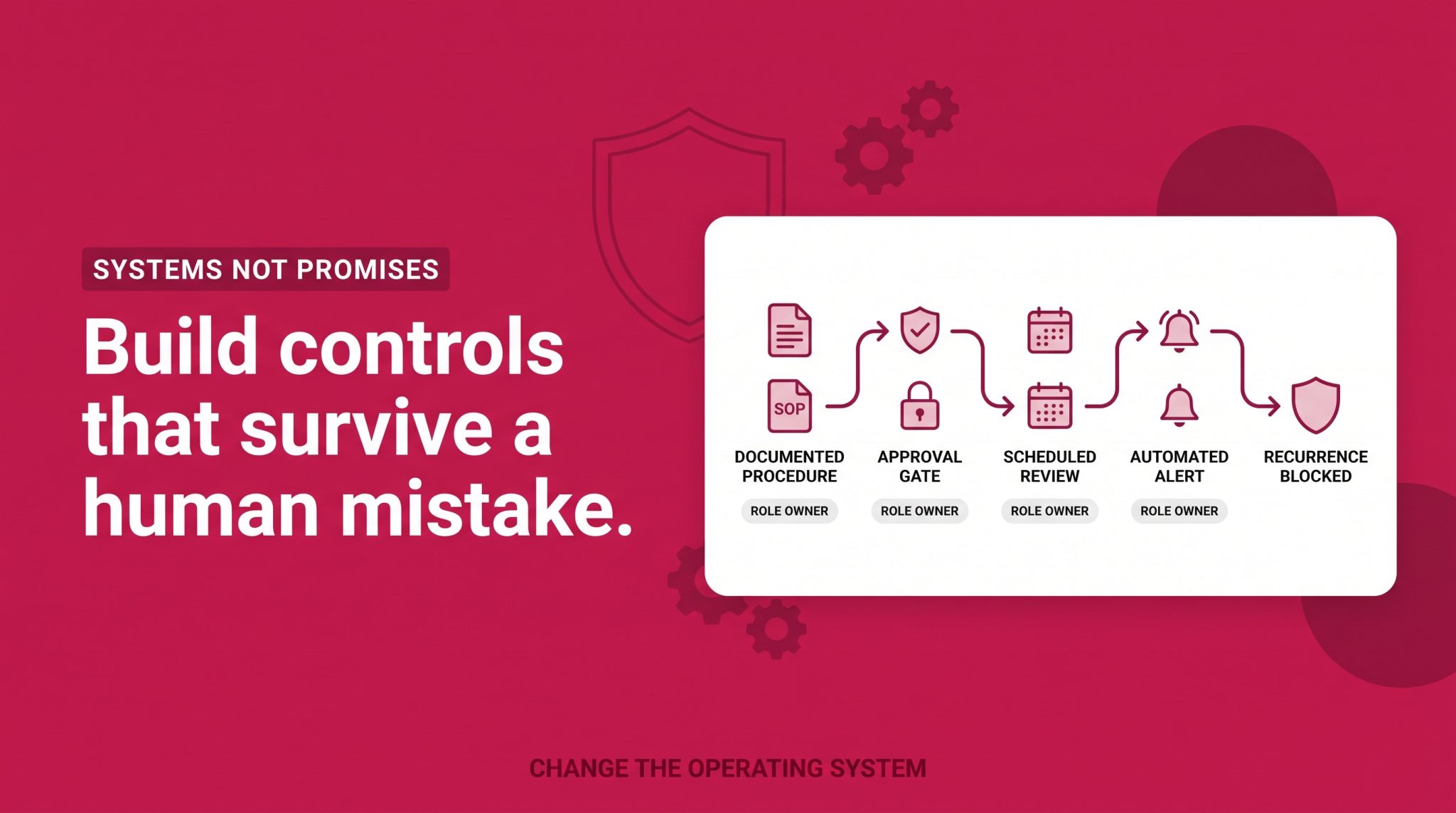
This is where second attempts most often fail.
Systems, not intentions
"We will monitor our account health weekly" is an intention. Reviewers discount it because nothing about the business has changed. A preventive measure is a change to how the business operates, such that the same failure cannot recur without a process breaking rather than a person forgetting.
Good preventive measures describe a documented procedure, a checklist, a system setting, a supplier agreement, a scheduled review with a named owner, or a third-party service. They specify who is responsible by role, not by personal name, because roles survive staff turnover and reviewers know it.
A useful test: read your preventive measures and ask whether the failure could still happen if the most distracted person on your team had a bad week. If the answer is yes, the measure is an intention.
Preventive measures template
Preventive measures
To prevent recurrence, we have implemented the following.
[New documented procedure. State what it requires, when it triggers, and which role owns it.]
[New verification or approval gate that must be passed before the risky action can occur.]
[Scheduled review, with frequency and owning role.]
[System, tool or third-party control, if applicable.]
These measures are documented in [name of SOP or document], which is attached. Responsibility sits with our [role title].
Worked example
Preventive measures
To prevent recurrence, we have implemented the following.
We have created a written Fulfillment Change Procedure requiring that any change to warehouse, carrier or cutoff time triggers a mandatory review of handling time settings on every affected ASIN before the change goes live. The procedure is owned by our Operations Manager and is attached.
No fulfillment change can now be actioned without a completed checklist signed off by the Operations Manager, covering handling time, shipping template and carrier settings. A blank copy of the checklist is attached.
Our Operations Manager reviews Late Shipment Rate, Order Defect Rate and Valid Tracking Rate every Monday, with a documented escalation threshold of 2% on Late Shipment Rate, which is half of Amazon's limit. This gives us time to act before a threshold is approached.
We have enabled automated alerts on our order management system for any order not dispatched within the promised handling window, routed to the Operations Manager and a named backup.
The evidence gate
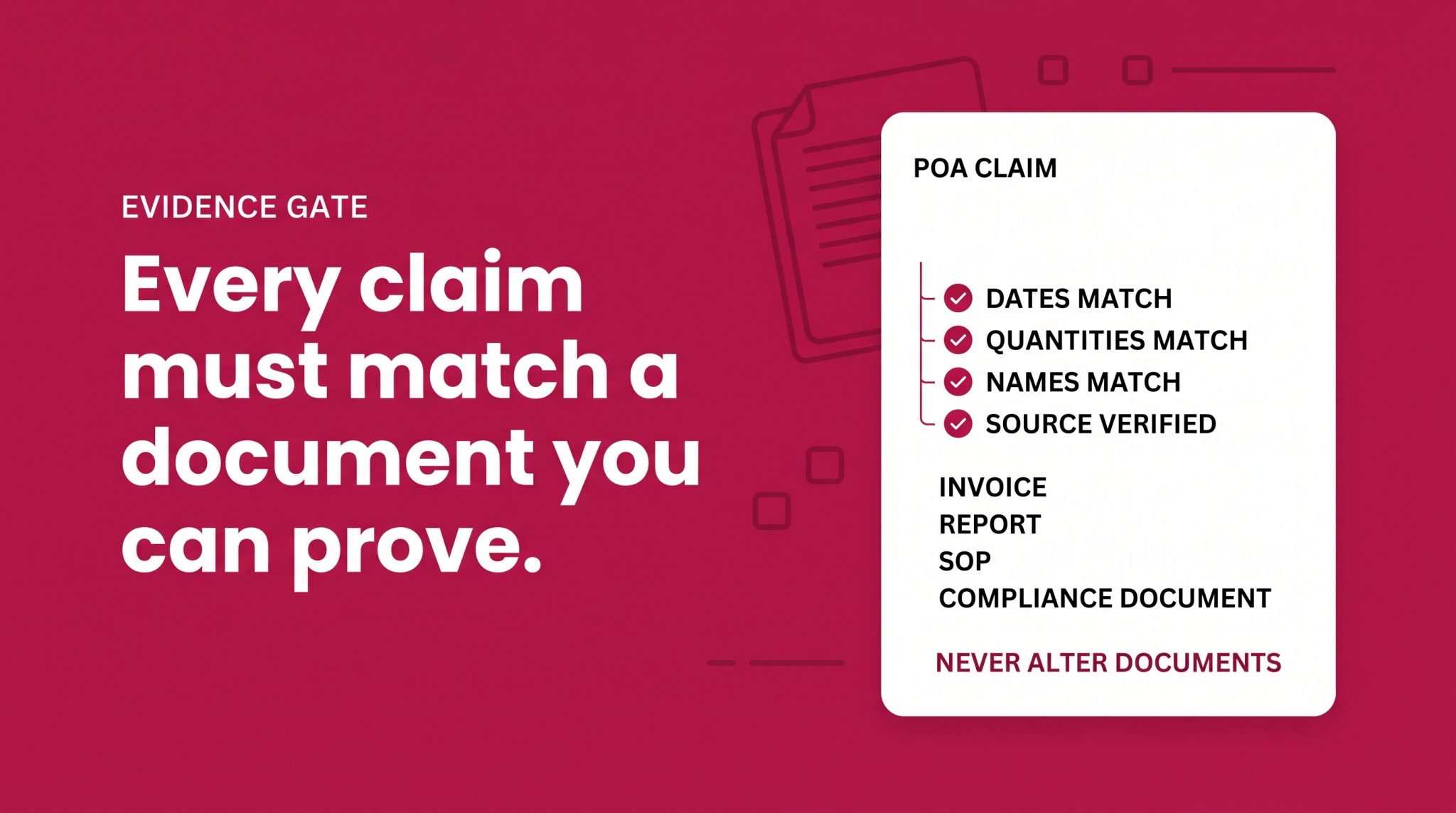
Most rejected appeals fail on documentation rather than writing. Each enforcement type has an evidence set it effectively requires, and missing the right document is a more common failure than a badly worded paragraph.
Inauthentic complaints generally need supplier invoices covering the affected inventory, showing a credible trail to the brand or an authorized distributor. Invoices are expected to be legible, dated consistently with your sales timeline, in a quantity that plausibly covers what you sold, and issued by a supplier Amazon can verify.
Intellectual property claims usually need either a retraction from the rights owner, or evidence that you are authorized, or evidence that the claim is mistaken. A POA alone rarely resolves an IP complaint, because the complaint belongs to a third party.
Used sold as new and condition complaints need evidence about how inventory is received, inspected, stored and packed, plus whatever you have changed in that chain.
Performance suspensions need the underlying reports, the corrected settings or processes, and ideally a period of post-fix data showing the metric has recovered.
Restricted product and safety cases need compliance documentation such as test reports, certificates or labeling evidence, plus proof that non-compliant listings are removed.
Dropshipping and related-account cases need evidence about business structure, supplier relationships and, where relevant, documentation of why accounts are linked and whether that linkage is permitted.
The documentation mismatch problem
The quiet killer in 2026 is documents that do not reconcile. Invoice dates that fall after the sales they are supposed to cover. Quantities that do not add up to what was sold. Supplier details that Amazon cannot verify against its own records. Formatting that fails the stated requirements.
Before submitting, reconcile your evidence against your own narrative as if you were the reviewer trying to break it. Dates, quantities and names all need to agree.
One line that matters more than anything else here
Do not fabricate, alter or backdate documents. Not an invoice, not a certificate, not a letter from a supplier.
Sellers under pressure sometimes reach for this, and it is the worst decision available. Amazon verifies supplier documentation directly and does so more often than sellers expect. A falsified document converts a recoverable performance problem into a permanent account closure under fraud provisions, forfeits held funds, and carries legal exposure beyond the platform entirely.
If you cannot evidence a claim, do not make the claim. Build the appeal on what you can prove.
The full Plan of Action template
Assemble the three sections into one document. Keep it to roughly one to two pages. Reviewers are reading quickly and length is not persuasive.
Plan of Action: [Account or ASIN], [Violation ID]
Summary This Plan of Action addresses [exact enforcement type as stated in the notice] affecting [account or specific ASINs], notified on [date], violation ID [number].
Root cause [One to three paragraphs. The specific process failure, how it occurred, and how it reached the customer or triggered the policy breach. Dates, numbers and ASINs. Ownership.]
Corrective actions taken [Numbered list of completed actions, each with a date and a reference to attached evidence.]
Preventive measures [Numbered list of systemic changes, each with an owning role, a trigger and a reference to attached documentation.]
Supporting documentation [Numbered list of attachments matching the references above.]
Formatting notes
Write in plain, factual sentences. Use headings that match the three sections so a reviewer scanning the document finds what they are looking for immediately. Number your actions and reference attachments explicitly. Keep the tone neutral. Do not open with an apology, do not describe the financial impact on your business, and do not criticize the enforcement decision, even where you believe it is wrong.
If the appeal is being submitted through a guided form with defined fields rather than a free-text box, map these sections onto the fields Amazon provides rather than pasting the whole document into the first available box.
Second worked example: inauthentic complaint
The first example ran through a performance case. Authenticity cases work differently, because the evidence carries more weight than the narrative.
Root cause
On 14 April 2026 our listing for ASIN B0XXXXXXXX was deactivated following three customer complaints regarding product authenticity, received between 2 and 11 April.
Our investigation traced all three complaints to units from a single purchase order, PO-2026-041, received on 27 February from a distributor we had approved in November 2025 for a different product category. Our sourcing procedure at the time required full documentation for new suppliers but permitted repeat orders from approved suppliers without category-specific verification. As a result, we purchased this product from that distributor without obtaining documentation tracing the units to the brand owner.
We are unable to confirm the provenance of that batch to the standard Amazon requires, and we accept that it should never have been listed without that confirmation.
Corrective actions taken
On 15 April we removed all remaining units from PO-2026-041 from our inventory. 218 units were created as a removal order, reference XXXXXXX, and have been destroyed rather than resold. Removal confirmation is attached.
On 15 April we proactively refunded all 47 customers who received units from that purchase order, whether or not they had complained. The order list and refund confirmations are attached.
On 16 April we audited our full catalog for any other products sourced from the same distributor and confirmed there are none currently listed.
We have ceased purchasing from this distributor entirely.
Preventive measures
We have implemented a written Sourcing and Authentication Procedure requiring that no unit is listed or shipped to Amazon without a purchase invoice tracing to the brand owner or an authorized distributor, verified per product category rather than per supplier. The procedure is owned by our Procurement Manager and is attached.
Our approved supplier list has been rebuilt on a per-category basis. Approval for one category no longer carries over to another, and each category approval requires documentation review and sign-off by the Procurement Manager.
Every inbound purchase order now requires a documentation check completed before goods are sent to Amazon, recorded on the attached checklist and retained for three years.
Our Account Health Manager reviews the Account Health dashboard weekly and reviews all customer messages referencing product quality or authenticity daily, escalating any authenticity reference within 24 hours.
Do not copy either example. They are shaped around fictional specifics. Copied verbatim, they will read as exactly what they are, and Amazon will treat them accordingly. Use the structure and the level of detail. Supply your own facts.
Common reasons appeals get rejected
The recurring patterns are worth knowing because they are all avoidable.
Generic language that could appear in anyone's appeal is the most common. So is addressing a different violation than the one cited, which usually happens when a seller assumes the cause rather than reading the notice. Promises instead of completed actions fail consistently, as does missing evidence for claims that require it.
Beyond that: blaming Amazon or the complainant, excessive length that buries the substance, emotional appeals about financial hardship, and resubmitting a rejected POA with cosmetic edits. That last one is particularly costly, because it tells the reviewer you did not understand why the first attempt failed.
If your appeal is rejected
A rejection is not the end of the process. It is information, and most reinstatements that eventually succeed involved at least one rejection.
Read the denial carefully. Amazon usually identifies a specific gap, even if the language is templated. That gap is your instruction for the next version.
Rewrite rather than edit. A new document addressing the case from a stronger angle consistently outperforms a light revision of a rejected one. Strengthen the section the denial pointed at, usually with new evidence such as an additional invoice, a written SOP you have since produced, or a third-party inspection report.
Then work the escalation ladder in order. The order matters, because skipping steps gets submissions rejected automatically.
First, re-appeal through the Account Health Dashboard with the strengthened POA.
Second, if you are enrolled in Account Health Assurance, consider a Seller Challenge. Amazon introduced this in September 2025 as an enhanced secondary review of listing-level enforcement decisions, with a stated target of around 48 hours. Eligible sellers get three challenges per 180 days, with each failed challenge replenishing after six months. The constraints are important. It covers listing-level enforcement only, never full account suspensions. You must have gone through the standard appeal first, since attempts to bypass it are rejected. The listing stays deactivated while the challenge is in review. And access depends on maintaining AHA eligibility, which is tied to your Account Health Rating, so a falling rating can remove your remaining challenges at the worst possible moment. Three per 180 days means choosing which ASINs are genuinely worth a slot.
Third, escalate outside the dashboard, typically by writing to seller-performance with the case ID and a tightened POA, and beyond that through executive seller relations channels.
When to stop writing and get a lawyer
Some categories are not template problems.
Section 3 suspensions, covering alleged deceptive or fraudulent activity, are the clearest case. They frequently involve video verification and multiple rounds of document requests, and the standard is different from a performance appeal. Fraud allegations, counterfeit claims escalated beyond a standard complaint, and related-account or linked-account matters belong in the same group, as do situations where significant funds are held or where you are facing legal claims from a rights owner alongside the Amazon enforcement.
If your livelihood depends on the account and you are in one of those categories, the cost of experienced representation is usually smaller than the cost of burning attempts. Getting the first submission right matters more in these cases than in any other.
Preventing the next one
Reinstatement is the emergency. Keeping the account healthy is the job.
Review your account health dashboard weekly rather than waiting for a notification. Amazon's guidance is to keep your Account Health Rating comfortably above 200, and Account Health Assurance eligibility sits considerably higher than that, so treating 200 as a floor rather than a target is the safer posture.
Set internal thresholds well inside Amazon's limits. If the Order Defect Rate limit is 1%, escalate internally at 0.5%. The point of an internal threshold is to give you time to act while the problem is still small.
Keep supplier documentation current and filed before you need it, because assembling an invoice trail under deadline pressure is how documentation mismatches happen. Audit listings periodically rather than reactively. And work through Manage Your Compliance to clear flagged issues before they escalate into enforcement.
Most of the preventive measures that convince a reviewer after a suspension would have prevented the suspension if they had existed beforehand. That is worth sitting with.
Get the investigation right and the writing follows
The hardest part of a Plan of Action is not the language. It is being willing to look honestly at your own process and name the thing that broke.
Sellers who do that work tend to write good appeals almost automatically, because once you know exactly what failed, the corrective actions and preventive measures write themselves. Sellers who skip it reach for templates, produce something that reads like everyone else's, and lose days they cannot afford.
Read the notice precisely. Investigate until you find the actual mechanism. Fix it before you write. Evidence every claim. Then write plainly, in three sections, and submit through the right route.
Flairox manages account health for brands selling on Amazon, including suspension prevention, compliance monitoring and appeal support. OurAmazon marketplace management service is built around catching the problems that lead to enforcement before they get there.
If you are dealing with an enforcement right now, or you want an honest assessment of where your account is exposed, talk to the Flairox team.
This article is informational and is not legal advice. Flairox is not a law firm. For Section 3 matters, fraud allegations, intellectual property disputes or any enforcement with significant funds at stake, consider consulting an attorney experienced in Amazon seller matters. Appeal routing and the Seller Challenge terms described here were accurate as of September 2026 and continue to evolve.
Frequently asked questions
Usually one to two pages. Reviewers read quickly and length is not persuasive. Specificity is.