 Raahim Sheikh
Key takeaways
Premium A+ Content (often called A++) is Amazon's top-tier content format, offering interactive modules that go beyond standard A+ Content.
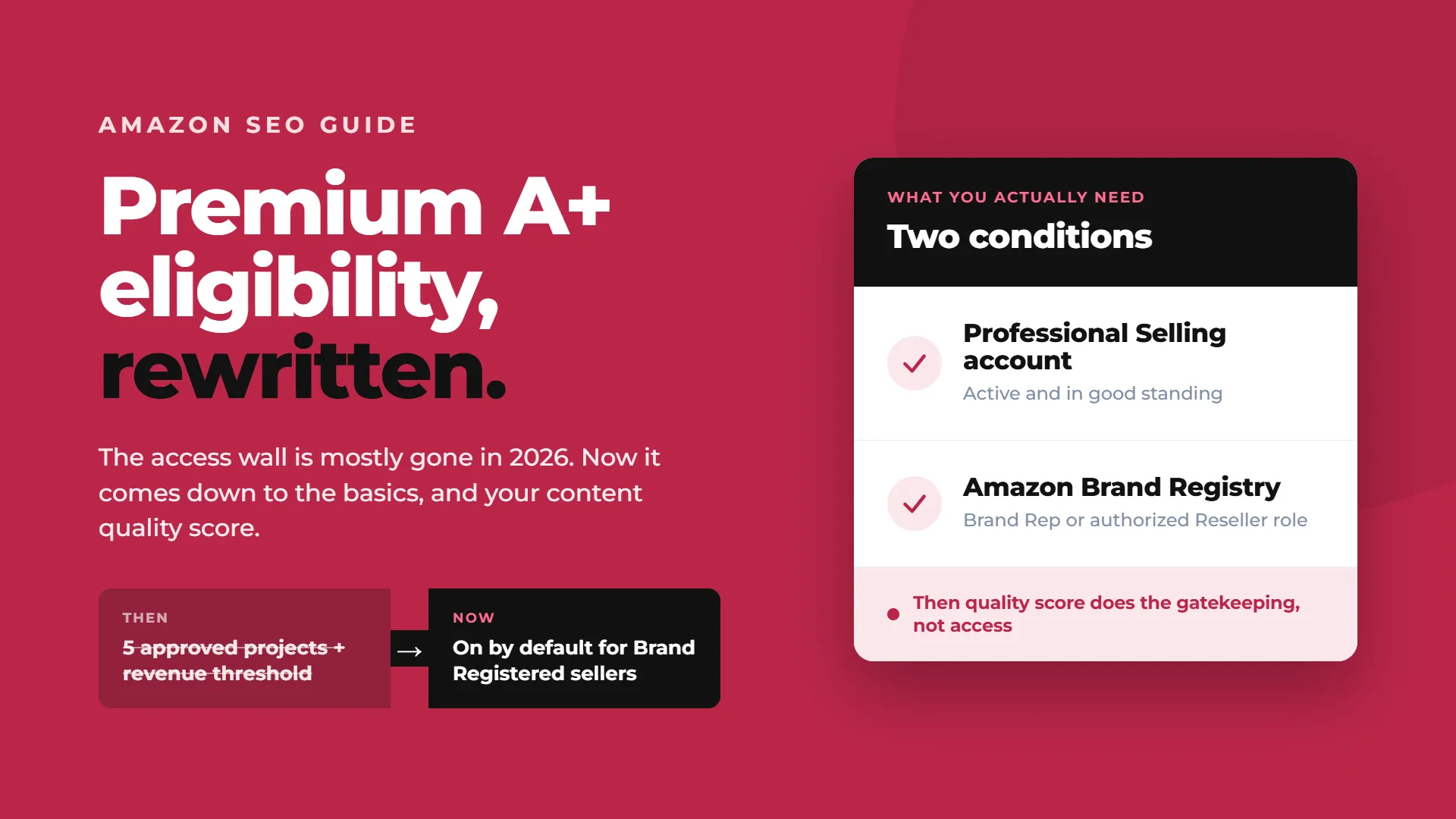
As of Amazon's May 2026 rollout, Premium A+ Content is now enabled by default for Brand Registered sellers, removing the older $5M sales threshold, invite-only access, and the previous requirement to earn access through five approved A+ projects.
All you need now is an active Professional Selling account and Brand Registry enrollment. Check your A+ Content Manager for the Premium modules directly.
Premium A+ Content offers up to 7 modules per project from a library of 19 module types, including interactive hotspots, multiple video placements, enhanced comparison charts, carousels, and Q&A sections, well beyond Basic A+ Content's 5 modules from a library of 14.
Amazon's own reporting shows roughly 80% of brands that activate Premium A+ Content see a measurable sales lift, with many seeing conversion increases in the 20% range or higher.
Since February 2026, Amazon also scores A+ Content weekly through its Content Quality Analysis tool, so having access to Premium A+ Content now matters less than what you actually build with it.
You've published A+ Content on every listing. Your images are clean, your bullet points are optimized, and your Brand Story module is live. Yet conversion has plateaued, and your competitors' listings suddenly look more polished, with hover effects, embedded video, and side-by-side comparison charts that yours doesn't have.
That's Premium A+ Content, and for years it was locked behind a strict eligibility wall. The good news is that Amazon significantly opened up access in 2026, which means more brands than ever can use it. The catch is that quality standards now matter more than access ever did.
This guide covers exactly what Premium A+ Content is, how eligibility works today, which modules you get, and whether the investment of design effort is actually worth it for your catalog.
What Is Premium A+ Content (A++)?
Premium A+ Content is an enhanced version of Amazon's standard A+ Content program, informally known in seller communities as A++ Content because it sits a tier above the regular offering. Basic A+ Content gives you up to 5 modules from a library of roughly 14 static layouts, using images up to 970 by 300 pixels. Premium A+ Content unlocks up to 7 modules per project from a much larger library of 19 module types, with larger images (up to 1,464 by 600 pixels), interactive hotspots, multiple video placements, enhanced comparison charts, carousel layouts, and Q&A sections.
The goal is the same as Basic A+ Content: replace generic bullet points with a richer brand story on the product detail page. The difference is depth. Premium A+ Content is built to hold a shopper's attention longer and answer more of their questions before they ever leave the page.
Premium A+ Content Eligibility Requirements in 2026
Eligibility for Premium A+ Content has changed significantly this year, so it's worth understanding both where things stand now and how you got here if you've researched this before.
The Old Requirements (No Longer the Full Picture)
For several years, Amazon gated Premium A+ Content behind two specific requirements: a Brand Story module published on every brand-owned listing, and five approved A+ Content projects within a rolling 12-month window. Brands that didn't meet both conditions simply didn't see Premium modules in their A+ Content Manager, regardless of how strong their content was otherwise.
What Changed in May 2026
Amazon expanded access significantly starting in mid-May 2026. Premium A+ Content is now enabled by default for Brand Registered sellers, removing the earlier invite-only access and the previous higher-volume sales requirements that had kept many smaller and mid-size brands locked out. Sellers no longer need to accumulate five approved projects or hit a revenue threshold before Premium modules appear as an option.
What You Actually Need Now
In practice, eligibility today comes down to the basics: an active Professional Selling account and enrollment in Amazon Brand Registry, with an account role that qualifies, such as Brand Representative or an authorized Reseller. If your brand meets those two conditions, log into your A+ Content Manager and check whether Premium modules are available when you start a new project. Amazon reviews and rolls out access on an ongoing basis, so if you don't see it yet, it's worth checking back periodically.
Quality Score Now Matters More Than Access
With the eligibility wall mostly gone, Amazon shifted its focus to content quality. Since February 2026, a Content Quality Analysis tool has been scoring A+ Content pages weekly across four dimensions: readability, information completeness, visual presentation, and conversion effectiveness. Pages that fall short get flagged as "Needs Improvement." In other words, getting access to Premium A+ Content is no longer the hard part. Building modules that actually score and convert well is.
Premium A+ Content Modules Explained
Once you have access, Premium A+ Content gives you module types that Basic A+ simply doesn't offer. Here are the ones that matter most.
Interactive Hotspot Modules
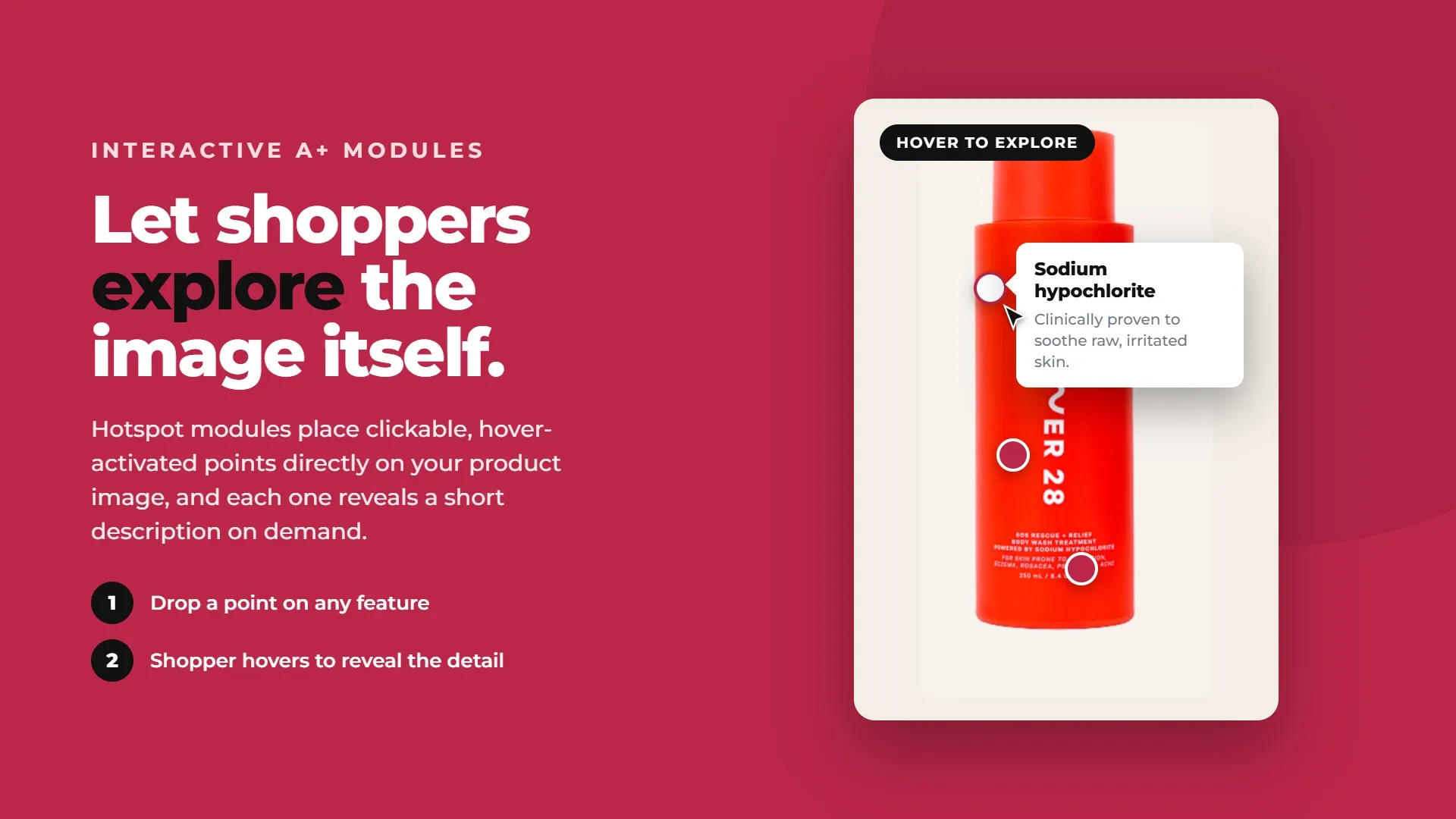
Hotspot modules let you place clickable or hover-activated points directly on a product image. Instead of static callout text, shoppers interact with the image itself, hovering over a specific feature to reveal a short description.
Enhanced Comparison Charts
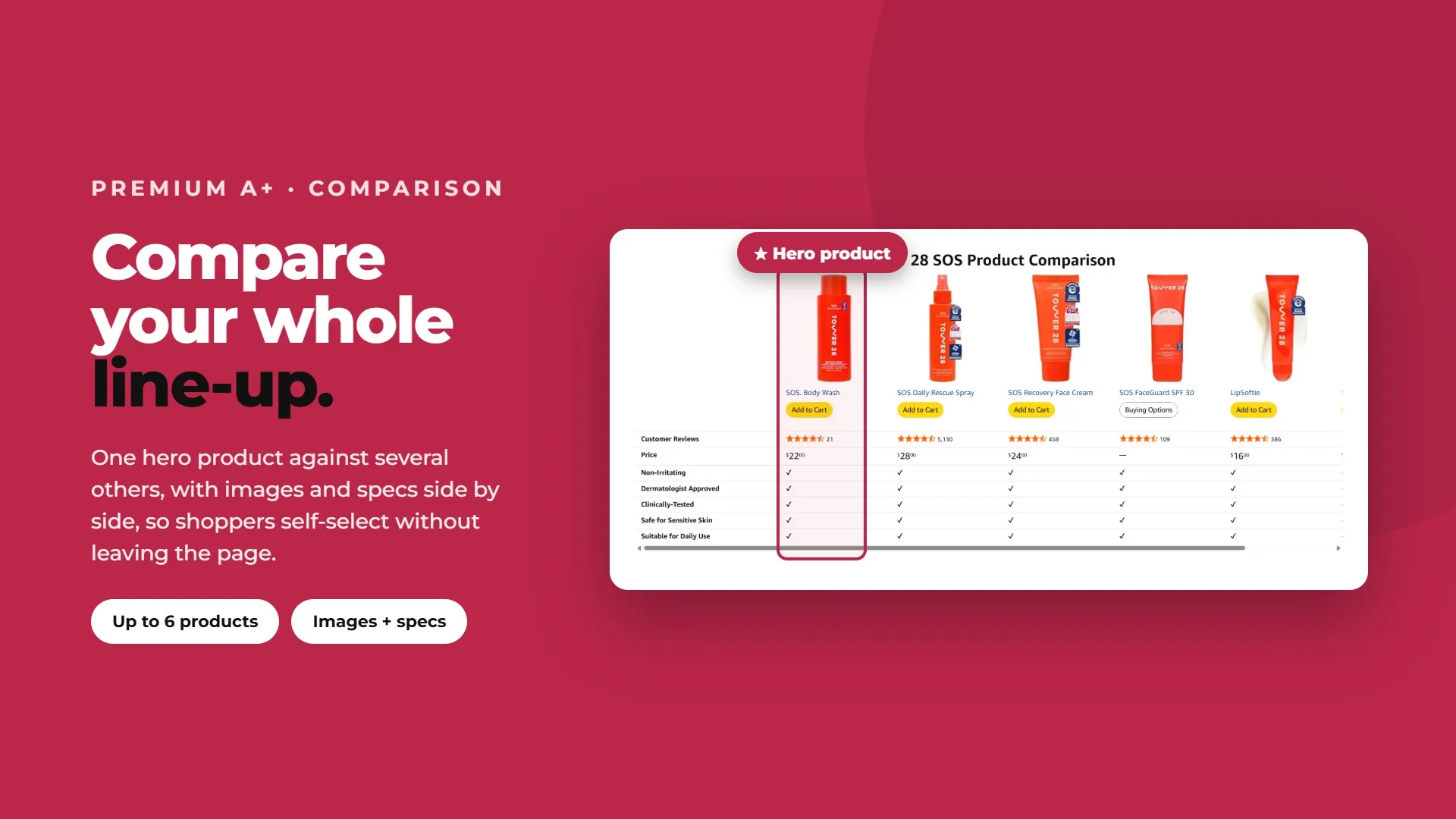
Basic A+ Content includes a simple comparison table, but the Premium version is far more capable. You can build a chart featuring one hero product compared against several other products, using both images and specifications side by side. This is particularly effective for brands with multiple product tiers or variations, since it helps shoppers self-select the right option without leaving the page.
Video Modules
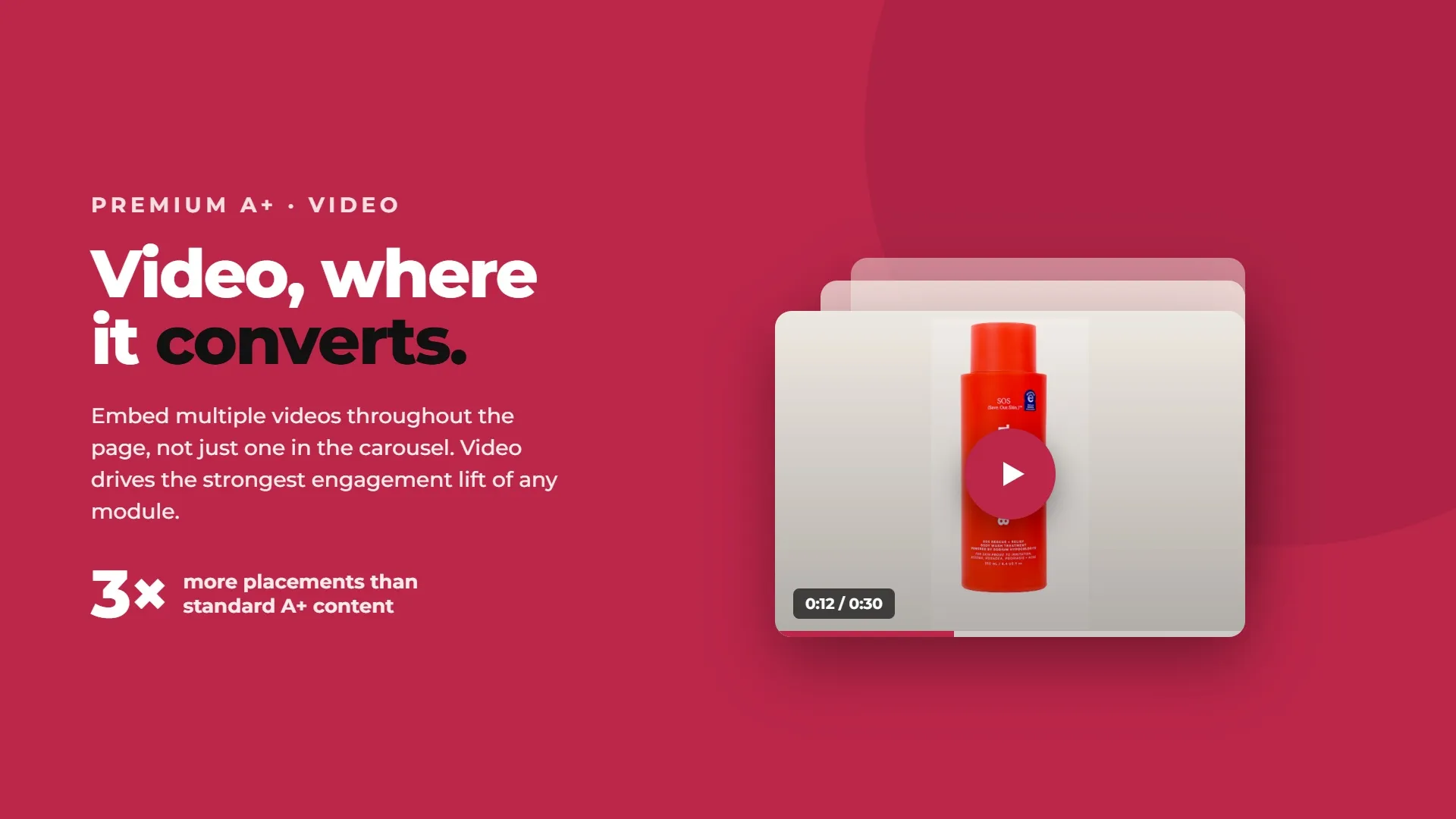
Premium A+ Content allows for multiple embedded video placements throughout your content, not just a single video in the standard carousel. This is one of the biggest differentiators, since video consistently drives the strongest engagement and conversion lift of any A+ module type.
Carousels and Q&A Modules
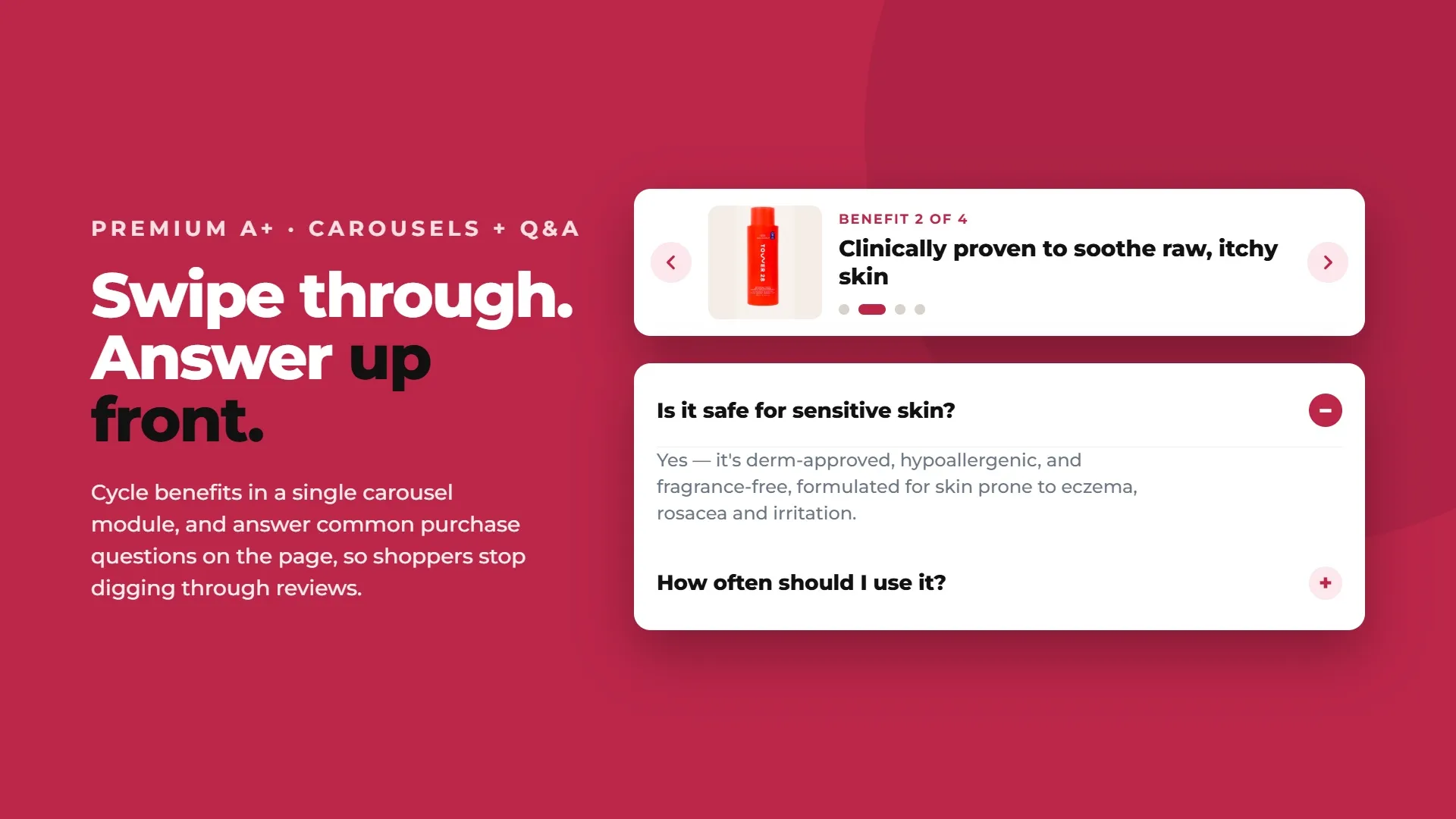
Premium A+ Content also includes carousel layouts for cycling through multiple images or benefits in one module, plus Q&A-style modules that let you proactively answer common purchase questions directly on the page, reducing the need for shoppers to dig through customer reviews for answers.
Basic A+ Content vs. Premium A+ Content
The two formats share the same purpose but differ in scale and access. Basic A+ Content is available to any Brand Registry member immediately, offers up to 5 modules from a library of about 14 static types, and uses images up to 970 by 300 pixels. Premium A+ Content, now available by default to Brand Registered sellers as of the May 2026 update, offers up to 7 modules from a library of 19 types, larger images up to 1,464 by 600 pixels, and adds interactive hotspots, multiple video placements, enhanced comparison charts, carousels, and Q&A modules. Both are currently free to use, so the real cost of Premium A+ Content isn't monetary, it's the design and content production effort required to build it well.
Is Premium A+ Content Worth It? Conversion Data and ROI
Conversion Lift Benchmarks
Basic A+ Content has been shown to lift conversion by roughly 3 to 10% on average, according to Amazon's own data. Premium A+ Content performs noticeably better. Industry reporting following the May 2026 access expansion found that around 80% of brands that activate Premium A+ Content see a measurable sales lift, and roughly 60% report conversion rate increases ranging from 20% up to significantly higher within 30 days of publishing. Video and interactivity are consistently cited as the biggest drivers of that gap, since they help shoppers picture themselves using the product in a way static images can't.
Categories Where It Moves the Needle Most
Premium A+ Content tends to deliver the strongest returns in categories where shoppers need more information before buying: dietary supplements, electronics, and other high-consideration or high-ticket items. If your products are simple, low-cost, and rarely researched before purchase, the lift may be smaller, though still generally positive.
Cost and Time Tradeoffs
Amazon currently offers Premium A+ Content free of charge to eligible brands, with no announced end date for that policy. That said, free access doesn't mean effortless execution. Interactive hotspots, multiple video placements, and comparison chart design all take more time and creative resources than a standard A+ project. For brands without in-house design capacity, this is often where the real cost shows up, and with Amazon's Content Quality Analysis now scoring pages weekly, rushed or thin Premium modules can actually work against you.
How to Get Started with Premium A+ Content
Confirm your brand is enrolled in Amazon Brand Registry and that your Seller Central account role qualifies.
Log into your A+ Content Manager and start a new project to check whether Premium modules are available to you directly, since access is now largely default for Brand Registered sellers.
Make sure your Brand Story module is live and current, since it's now the primary content block in the "From the Brand" section and reflects directly on your Quality Score.
Prioritize your highest-traffic or highest-margin listings for Premium modules first, rather than trying to rebuild your entire catalog at once.
Review your Content Quality Analysis scores regularly and address any "Needs Improvement" flags before they affect more listings.
Common Mistakes to Avoid with Premium A+ Content
Assuming you still need to "earn" access through five approved projects. That gate was removed for most Brand Registered sellers in May 2026, so check your A+ Content Manager directly instead of waiting.
Letting Brand Story sit as an afterthought. It's now the default module in the "From the Brand" section, so an outdated or thin Brand Story undercuts your Quality Score.
Ignoring the weekly Content Quality Analysis scores once your Premium A+ Content is live.
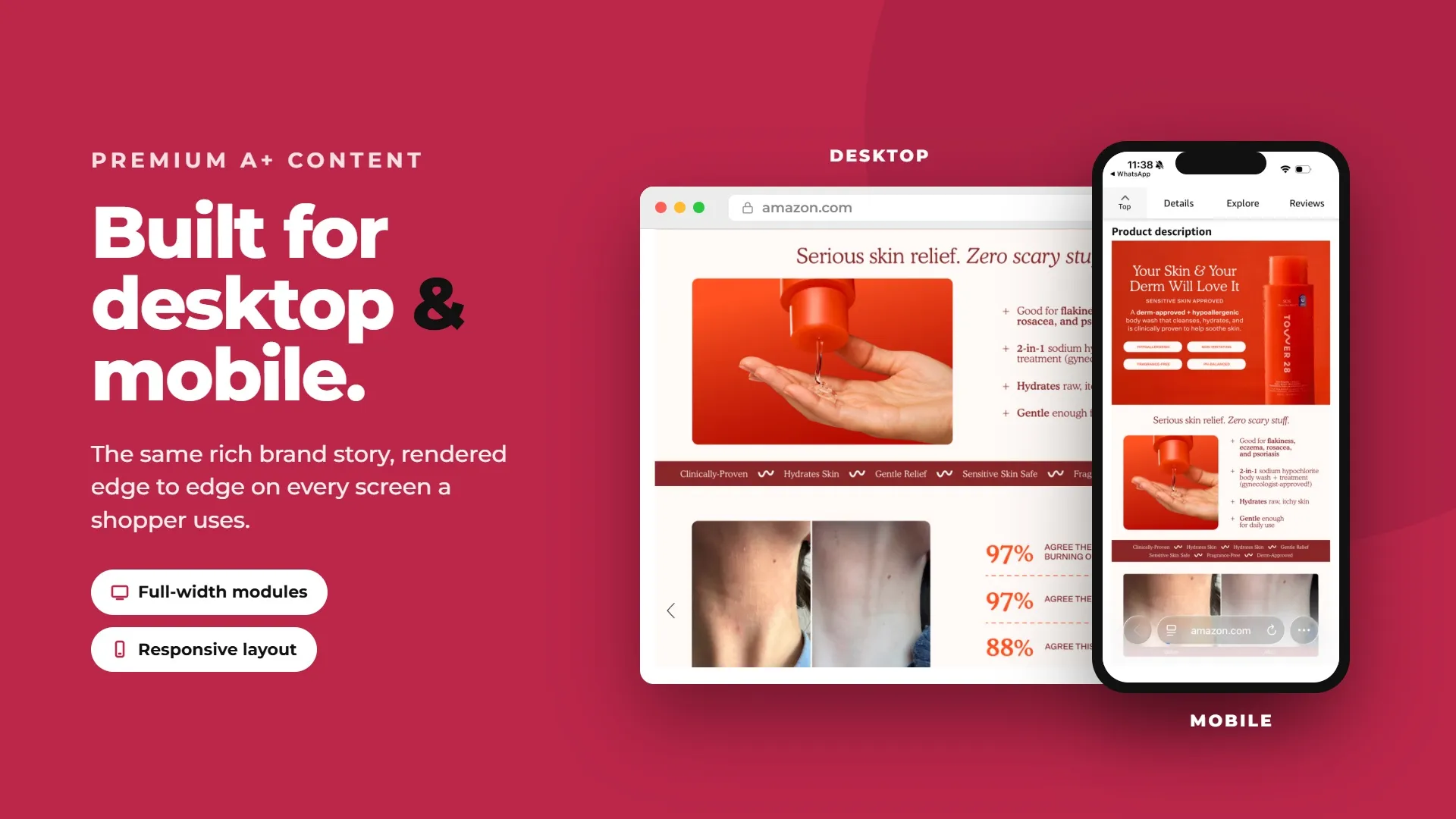
Overloading modules with dense text instead of visual storytelling, especially since most Amazon shopping now happens on mobile.
Treating Premium A+ Content as a one-time project instead of an ongoing content strategy.
Conclusion
Premium A+ Content has gone from one of Amazon's most exclusive listing tools to one of its most accessible. For years, brands had to earn their way in with a Brand Story on every single listing and five approved A+ Content projects, which meant smaller and mid-size sellers were often shut out no matter how strong their creative was. The May 2026 update changed that calculation. If you're enrolled in Amazon Brand Registry and hold an active Professional Selling account, you likely already have access to Premium modules sitting inside your A+ Content Manager right now.
That shift moves the real competitive advantage from access to execution. With Amazon scoring every A+ page weekly through Content Quality Analysis, the brands that pull ahead won't be the ones who simply unlock hotspots, video, and comparison charts, they'll be the ones who use those modules to build a genuine narrative: a strong hook, clear proof points, honest comparisons, and a brand story that holds up on both desktop and mobile. Given that roughly 80% of brands see a measurable lift after activating Premium A+ Content, and high-consideration categories like supplements and electronics tend to see the largest gains, the format is worth prioritizing for most catalogs, provided you have the design bandwidth to do it properly.
Frequently asked questions
Premium A+ Content, also called A++ Content, is an enhanced tier of Amazon's A+ Content program that adds interactive modules like hotspots, video, and advanced comparison charts on top of the standard A+ Content offering.